Café Prückel

My excitement about being in Vienna knows no bounds. I remember as a very small boy waking up in the morning, opening my eyes just a tiny bit to see if by any chance I was in Knysna with my grandparents. If I could focus peeping through my eyelashes and there were the white and red stripes of the curtains in the spare bedroom of my grandparents’ home, I would jump out of bed and dive into bed with my grandmother. (The stories of Knysna are in other blogs already.) I feel the same way here – I wake up every morning from a wonderful deep sleep, and in those first moments of waking (always reluctantly for me – I am not a morning person), I open my eyes to the most exciting discovery – I am in Vienna! I somehow cannot get used to the fact that this incredible privilege can be all mine.

Today I met with a Ukranian academic who now lives in Vienna after a lifetime of working in field of ageing, mostly at the United Nations. We meet at one of the very typical Viennese Cafés, Café Prückel, to many considered their second livingroom in Vienna. Established in 1903 it makes on understand that UNESCO honoured Viennese Coffee Shop Culture as Intangible Cultural Heritage in 2011. Yes, that is how important Coffee Shop culture is in Vienna. Stylish, understated in 1950’s (what could be considered Swedish) decor, it oozes sophistication. No one dares just walking in and finding a table. The air of tradition keeps one glued to the doormat, like an obiedient dog that has been trained to not set foot off that mat. Waiters and runners (the former in uniform of black waistcoat, the latter in plain white shirts) make no effort to meet you at the door the minute you walk in. Trying to make eye contact is impossible, the art of ignoring this is highly evolved.
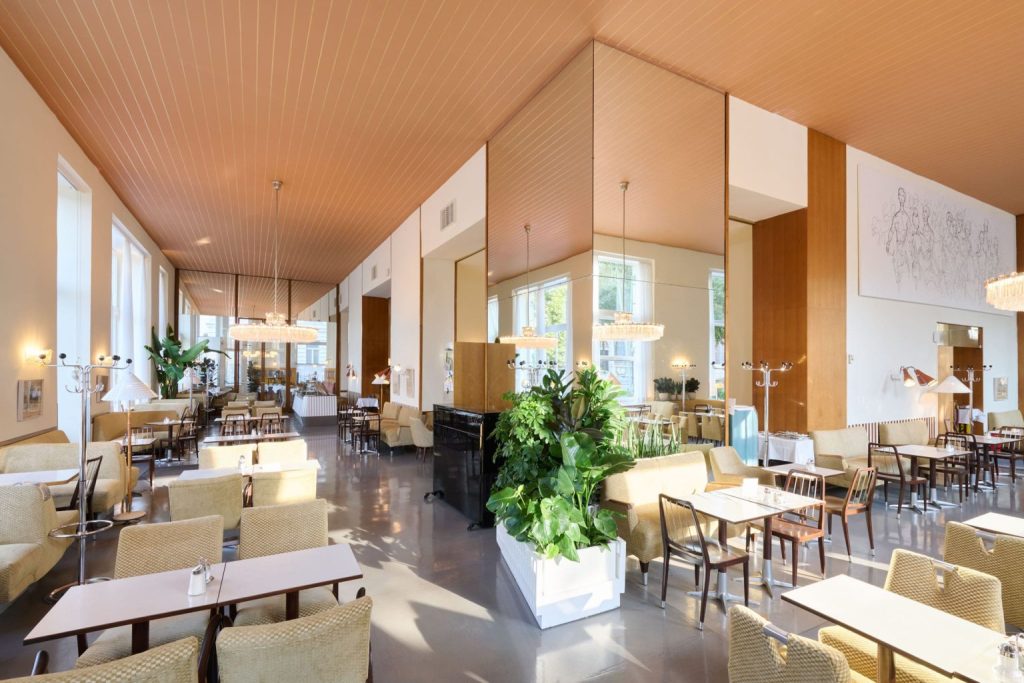
My host booked a table for us – the waiter eventually appears and in my best German I am proud to announce that we have a reservation for two people. Showing no appreciation for what I consider to be perfect German, he shows me to a table to sit in the meantime, as I am ten minutes early for the booked appointment time. Unforgivable, I see how my esteem is diminished. The undressing ritual starts – coat off, definitely cap off and hung on the very full coat stand. (I am not sure about the scarf etiquette, however, I decide to make my own rule as I love my bright orange pashmina.) Dead on 11h00 my host arrives and is shown to the reserved table which is now free. Of course.

Our waiter is a man of middle age (meaning he is a bit older than me). Stern. In spite of my impeccable German (in my opinion, which I rehearsed on the way to the Café), he has to repeat our order with a frown just to make sure we understand that our German is still that of a foreigner. Coffee is served on a small, oval silver tray with a demi glass of water on the side. Always the water. Then enters the period of being completely ignored – you have your coffee, now shut up. We want to order two croissants. Catching his eye is impossible. I eventually do the most uncouth thing possible – raise my hand as he walks past. A sideways sneer with a hiss of “gleich” comes my way, followed by another few minutes of being ignored. Exasperated, he comes back; we order our croissants, feeling like schoolchildren who have been scolded for talking out of turn.

When the time comes to get the bill, I am too scared to even look at him. Yet, we manage to catch his eye and pay the bill. As he is about to take away the two little silver trays, he notices that neither of us had drunk our water. He puts the trays back, looks at us and says in perfect English “drink your water, it is good for you!” Like our school hostel matron when I was a child waiting for us to take our medicine, he stands watching us empty our two glasses of water. Very politely he smiles and thanks us for visiting. The next guests are already waiting for our table.
Madama Butterfly

I have often been mocked for my ability to wax lyrically and my habit of exaggeration. I have had just too many “the best meal of my life” to be taken seriously by friends, or having seen “the most beautiful thing ever” about five times a week… I recall the words of the first therapist I saw. I met her on my 19th birthday in Stellenbosch (18 September 1984) when my life was falling apart (for the first time – it happened many times subsequently). With her help, I decided to drop out of university (God, imagine if I became a Dutch Reformed dominee) and booked a ticket to Europe. Luxava. Flying from Cape Town to Johannesburg, then Nairobi, then Cairo, then Luxembourg. A free bus took me to München where I was supposed to meet a friend. (I think there is another blog on this epic Wagnerian drama in seven acts.) My point is this: the parting words of my therapist, “never lose your sense of wonderment.” Maybe it was more a spell (she was a kind of a witch) than a wish, for forty years later I have not lost any of my sense of wonderment. I laugh at my ability to be like a five-year-old boy. Last night at the Christmas Market on Rathaus Platz, I was tempted to play with the kids on the merry-go-round; I was so excited about being in Vienna!

On a side note (and there is a blog on this story as well). I brought my Mother to Vienna a few years ago, when her cognitive impairment was already very real. We walked through the streets of Vienna also at this time of year. Every time we walked past the Vienna State Opera or any one of the iconic buildings, she would say “that is the most beautiful building I have ever seen”. I quickly realised that she said this about the same building we walked past half an hour ago – admittedly they do look similar in architecture – but never the less. It was the most beautiful building all over again, every time.

So I argued, reflected, and debated with myself on the price of tickets for the opera. They are excruciatingly expensive. I booked online about five times, only to cancel before paying when I saw what it translated to in the exchange rate. On the spur of the moment last night, I decided to go and see if there were return tickets available. One of the many “agents” outside the opera house offered me a ticket in a Loge for an amount that did not make my heart stop a beat. I bought it, immediately thinking that it might be a scam! I hung around outside, keeping an eye on him, wondering if I should take a photograph of him just in case. The doors opened at 18h00, and I found that my ticket was not only valid, but for a Loge right above the orchestra, in a relatively good spot.

The Vienna State Opera house (about to sway lyrically, skip if you want) was designed by August Sicard von Sicardsburg and Eduard von der Nüll, began in 1861 and opened with Mozart’s Don Giovanni in 1869. It is almost incomprehensible to think that it took only eight years to construct this monumental masterpiece. (Both architects died before the completion of the building; von der Nüll ended his own life [with a surname like that…] and Sicardsburg died from stress [all those bloody columns and arches, he should have known better] as a result of the public criticism from the Viennese who thought the building was not high enough and too squat). Of course, the building was bombed severely during WW2 and then again magnificently restored. It is said that the opera house embodies several deeper ideas: architecture as moral pedagogy (the building teaches how to move, gather, wait, listen, and attend – all the skills of civic life). Public culture as dignity (shared cultural good, not merely elite consumption [well, I am not so sure about that]). Memory and continuity (acting as architectural witnesses to empire, collapse, war, and renewal). I am intrigued by my own fascination with and attraction to this building. I remember standing in front of it in 1985 for the first time; I felt completely consumed by it, mesmerized, bewitched, transported. It holds so much of what the world has lost, of what needs to be lost, in everything that is wrong with the world juxtaposed with breathtaking beauty. Iconic in its symbolism, the architecture captivates the imagination. One cannot just saunter up that sweeping staircase; it demands a regal and cautious slow step. (I watch how people walk up and down this marble wonder; no slouching, no sauntering…)

There is so much memory and narrative in this aged construction, encapsulating a bygone world of wonderment. Ok, I will stop here. Go and make yourself a cup of tea because now I will tell you about Madama Butterfly, after that short introduction…

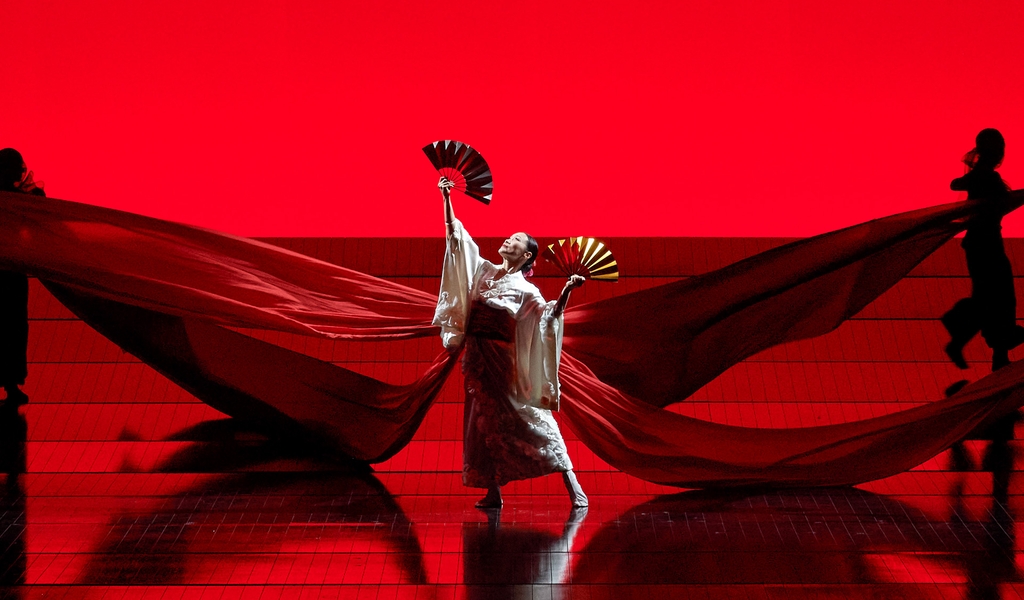
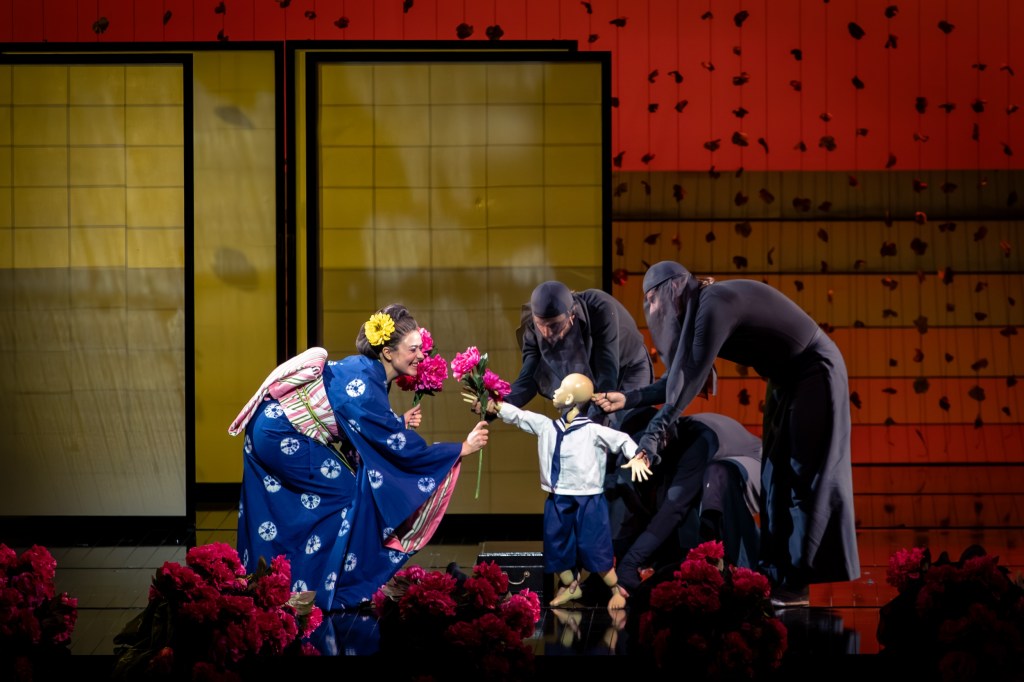
This production is by the famous Hollywood director Anthony Minghella, who died in 2008. (I have seen it before as a production at the Met in the cinema, but never as spectacular as this performance.) The choreography is done by Carolyn Choa, who was married to Minghella. For all the criticism of exoticist tendencies (I know, I know), it is a story that rings so deeply in the psyche of our colonialist world. The use of Bunraku-style puppetry (Butterfly’s little boy is a puppet with three visible puppeteers) somehow makes this little creature more real than any living little child I have seen over many, many performances can do. There is an audible gasp that went through the audience when this puppet boy appears. The pathos that emanates from this little creature holds such emotion; it honestly is almost too much to bear, yet it avoids sentimental realism. It is the symbolic that speaks louder than any sentimentality.

The power of this production is a completely bare stage with just a few Japanese sliding screens, creating a “radical minimalist space as emotional landscape” (ChatGpt) that is more psychological than what it is geographical. (I recall all the old sets of Japanese cherry blossom trees and fountains…). “Unlike many contemporary “director’s opera” approaches, Minghella’s Butterfly is:

  • not ironic
  • not deconstructed
  • not updated to a different era.

Instead, it is ethically attentive:

  • to gender
  • to power
  • to vulnerability
  • to silence.

The tragedy is allowed to stand – quietly, inexorably.”

Right, you get the message. I was in tears within ten minutes. The beautiful singing, the orchestra right beneath me playing with such tenderness and passion, the stage set, the building, all of it. And then at interval…(to be continued).