Afrikaans, soetste taal…

Die dae raak min, besef ek eers nadat ek een moerse sak groceries gaan koop by die Spar op die hoek. Want ek het laasnag vreemde drome gehad wat my laat wonder het of ek dalk skeurbuik het. Want daar was nog nie ‘n groentetjie van ‘n dag oud oor my lippe vandat ek hier aangekom het nie. Hoe kan mens dan groente eet as daar koeke en terte en soetgoed om elke hoek en draai vir jou roep soos Loerelaai….kom! Kom eet my! Daai heks van Hansie en Grietjie sou lekker met haar een tand vir my gelag het toe sy naderwink met haar mooi koekiehuis. (Dit klink nou nie so lekker nie maar kom ons beweeg aan.)

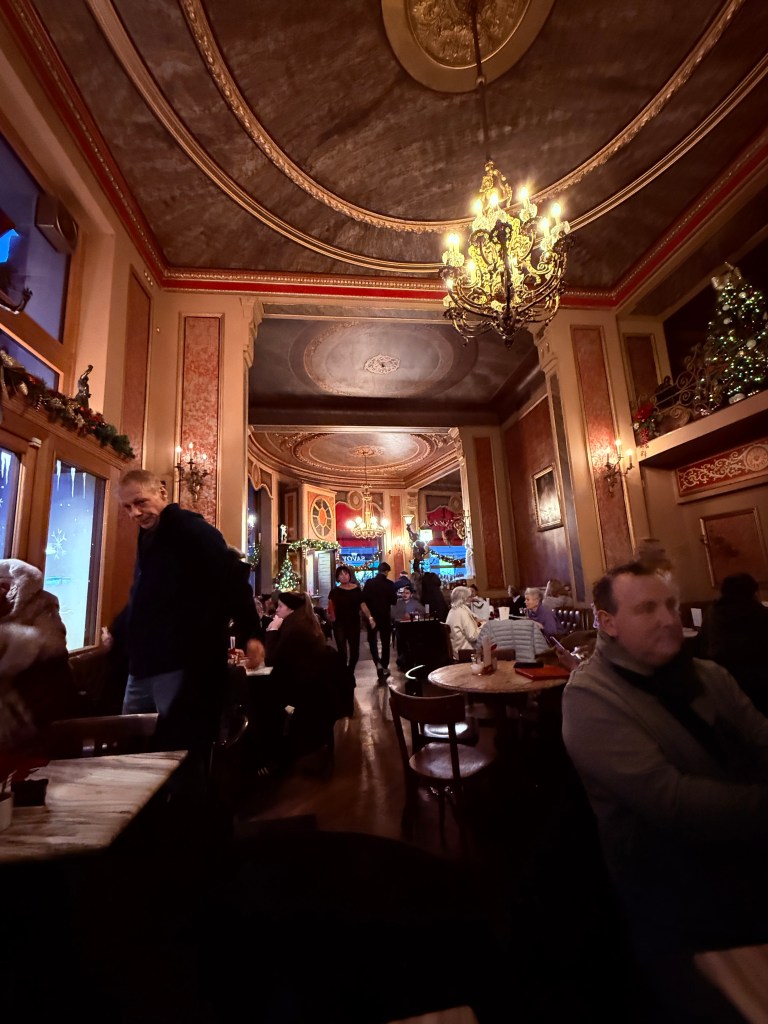
Sowat van soetgoed in kuns omskep kan mens nie oorvertel nie. Jy hoef na geen museum of kunsgalery hier in Wene te gaan nie. Glip net by die eerste koffiewinkel in en ‘n uitstalling oorval jou. Dit is pikant, blinkglad met lae kleure en teksture van fluweel tot sy, brokaat en hier en daar ‘n ou stukkie koordfluweel. Opgetooi, opgesmuk met die fynste versierings wat mens nie kan dink jy moet opeet nie. En asof dit nie oordadig genoeg is nie, ‘n blerts vars room of geel vla wat jy voor jou siel weet nie Moirs is nie… So word ek elke oggend wakker, klap my foon nader en kyk watter koffiewinkel het ek nog nie besoek nie. Sestien stoppe op die tram sit my nie af nie. Ek het al die tyd in die wêreld. Ek hou my vreeslik grênd want ek het mos nou al die mense dopgehou. Jy wag net binne die deur, smile baie groot vir die kwaai oom (dis meestal ooms) en vra op jou mooiste hogere Duits of hy dalk, miskien, indien moontlik iewers ‘n ou plekke vir een persoon het. Gewoonlik is dit net ‘n kopknik wat jou wink in die rigting van die kleinste tafeltjies was styf teen mekaar ingepak is. Jy hang jou jas op (jirre jelp jou as jy hom oor die stoel drapeer) saam met jou keps en serp, en skuif dan baie versigtig in jou plekkie in.

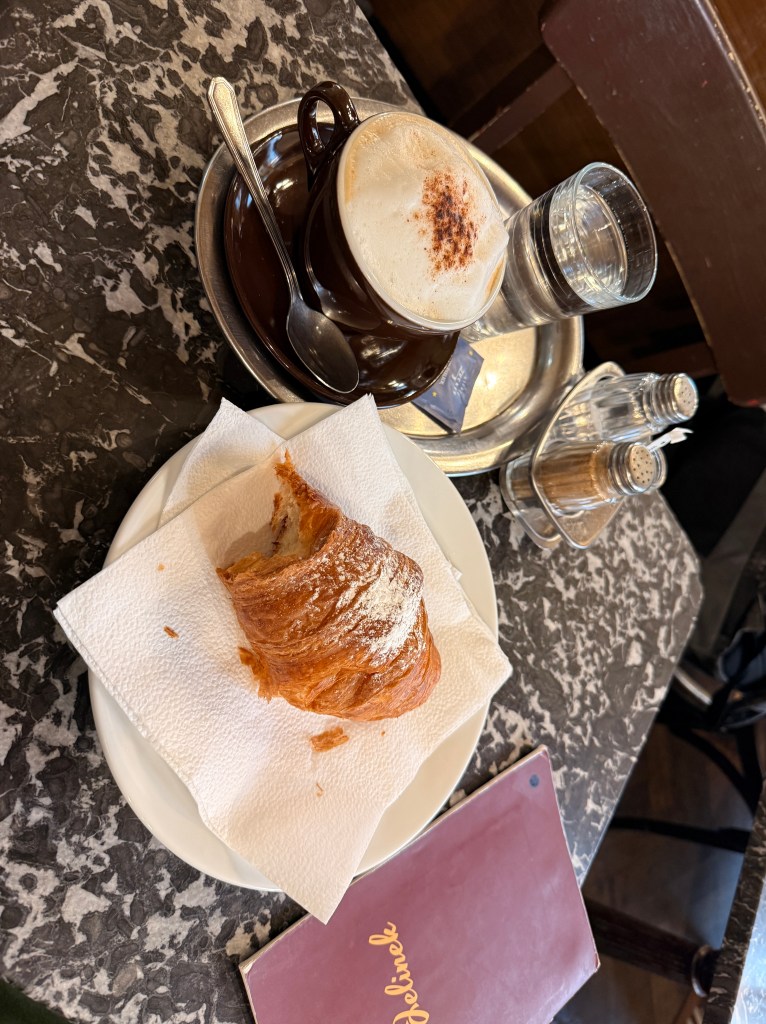
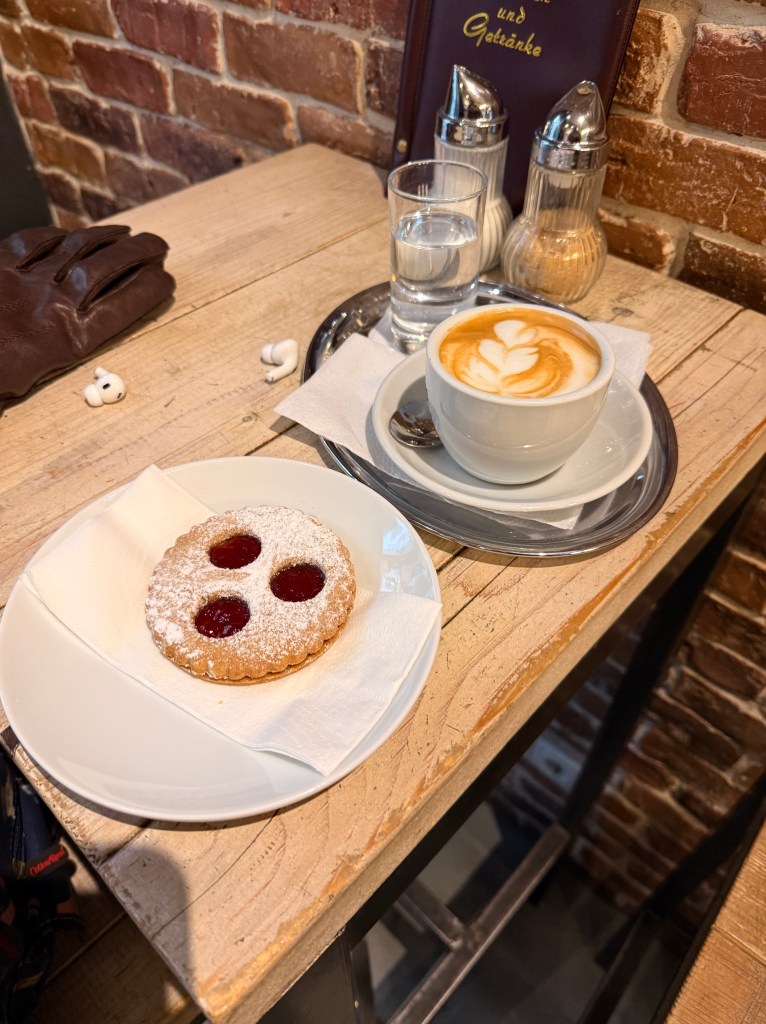
Duidelik is dié koffiewinkels nie gemaak vir mense met groot boude nie, want dis ‘n mooi mik en stadig skuur of die tafel langsaan se tafeldoek is om jou enkels gevou met alles wat daarop gedek was. Teen dié is my senuwees op en wonder ek hoekom ek dit enigsins probeer het om mee te begin. Maar hier is ek nou, opreg Duits en reg vir die show om te begin. Jy gee dadelik jou game weg om “koffie” te bestel, nog erger ‘n “cappucino”. Jy sing met jou mooiste aksent “café melange” (dis nou koffie met warm melk). As jy baie mooi kyk mag daar ‘n sweempie van ‘n trek in die hoek van die oom se mond wees wat sê “mooi probeer, hou aan oefen”. Die klein ovaal silwerskinkbordjie wat aan nagmaal herhinner kom, kompleet met ‘n doilie, een sakkie suiker en ‘n knertsie water. Baie warm koffie kan jy maar van droom, hy is so dat jy hom dadelik maar moet drink of dis koud. En daai oom sal die skinkbordjie laat staan tot daai water groen word, drink sal jy daai water drink of jy vat nie jou skinkbordjie nie.

Die soetding – van watter nering hy ookal mag wees – is nou die tweede bedryf, sonder ‘n pouse tussenin. Om knapvars te bly het elke stuk koek ‘n lagie dun deurskynende plastiek om die gesnyde deel. (Laat my toe om gou ‘n ander draai te loop – dit is al vertel in ‘n vorige blog… So kom daar ‘n Drive-In op Riversdal. My Ma en Pa was altyd mal oor flieks, so ons trek gereeld met die El Camino bakkie Drive-In toe. Grease was seker een van my hoogtepunte. Ek en Antonette maak piekniek agter in die bakkie, baklei heelpad soontoe en terug. Af en toe maak my Ma die skuifvenstertjie oop en gee ons een moerse oorveeg – mog het troffe – een kry ten minste ‘n hou. Dis vir vyf minute skietstilstand tot sy (Antonette) my weer begin terg. Een aand gaan ons met die kar – een of ander stasiewa op daardie stadium. Tannie Ems en oom Crous gaan saam. Een van die hoogtepunte van Drive-In is dat met die interval kan ons iets koop by die kafeteria. Die betrokke aan is dit hotdogs. Onthou, ons praat nou so van rondom 1976. Die fliek begin na interval en almal is stil aan’t eet. Na die tyd vra my Ma vir tannie Ems hoe was haar hotdog. “Nee jirre Ann dit was die taaiste ding wat ek in my lewe nog ge-eet het”. Nou ja, in daai jaar het “cling wrap” vir die eerste keer sy verskyning in Suid Afrika gemaak, en het tannie Ems die hotdog met clingwrap en al opge-eet, min wetende van die nuutste uitvindsel. Ons het vir jare daarna nog lekker saam met haar gelag oor dié aand.)

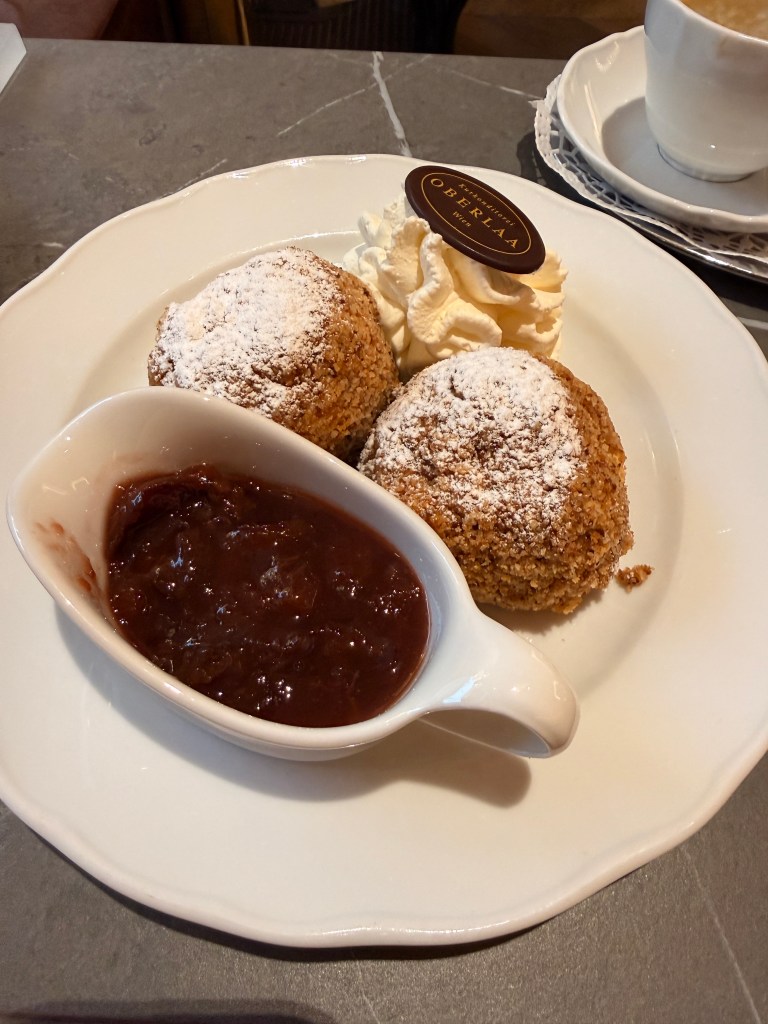
Terug in Wene sien ek natuurlik nie die stukkie deurskynende plastiek nie – mens se oë is mos ook nie meer wat dit was nie. En daar is ‘n lepel en ‘n vurk, wat my altyd effe op my senuwees maak, want watter een gaan in watter hand. Mos nie so groot geword nie. Met die eerste vurksny om ‘n klein stukkie koek op te tel kletter die hele ding uitmekaar soos die plastiek die koek uitmekaar laat spat. Ai, ek kyk om my rond om te sien wie het nou almal gesien, maar sjoe die mense is beleefd. Niemand roer ‘n wenkbrou nie. Les geleer. Maar nou sit ek eers en kyk wat maak mens dan nou met die stuk plastiek wat soos ‘n gebruikte (ok ek sal nie sê nie maar julle kan raai) nou iewers gebêre moet word. Daai skinkbordjie is baie klein en so netjies hy hoort seker nie daar nie. Op die kant van die koekbordjie seer sekerlik nie wat dis so mooi versier met versiersuiker. Ek probeer rondom my kyk wat die ander mense doen, maar wragtag ek sien nie een stukkie plastiek nie. Had ek nou ‘n handsak gehad het ek hom daarin weggesteek in ‘n tissue, maar nee, het nie een nie. Ek dog toe nou maar te hel met hulle, hy moet nou maar daar lê en kyk vir my as bewys van my onkunde. Ek sal iewers gaan oplees of vir ChatGpt vra wat ordentlike mense met daai stukkie plastiek doen.

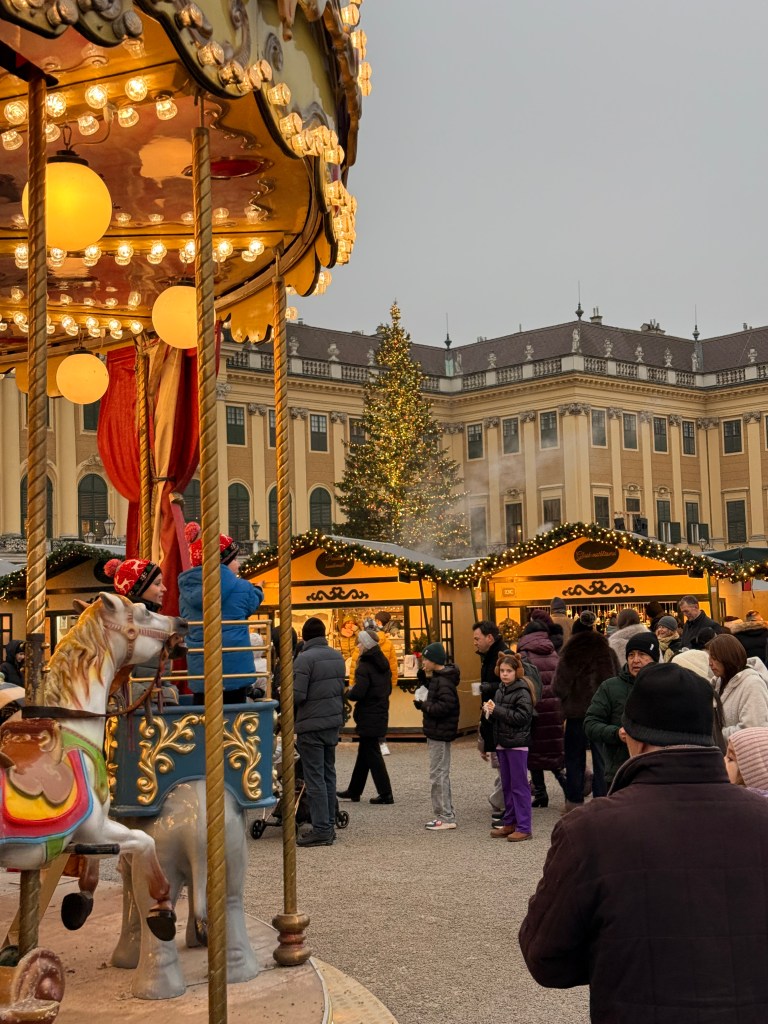
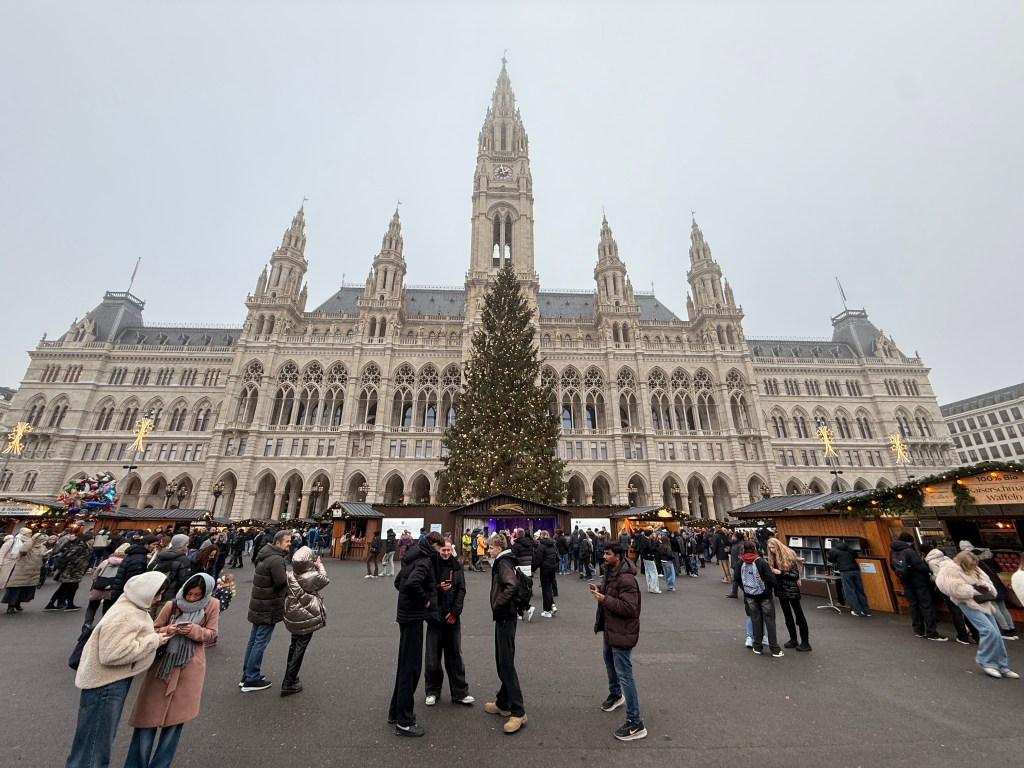
Nou ja, almal weet dat ek nou nie regtig oor die kop geslaan is met Kersfees nie. Baie gemengde gevoelens oor dié tyd van die jaar, wat ek nie hier op sal uitbrei nie. Maar mense, Wenen kan enige Christmas Grinch soos ek bekeer. Daar is nie ‘n park of ‘n plein wat nie op getooi is nie of waar daar nie ‘n krismismark pronk nie. Geen normale mens behoort buite te wees in hierdie bittere koue nie, maar nee, hulle is gepelsjas en pufferjacket, musse en handskoene en stewels om niks te mis nie. Duisende, letterlik, mense maal buite rond in 2 grade. Dit stamp en stoot om by stalletjies uit te kom wat Glühwein verkoop wat op ‘n wonderbaarlike manier van binne af warm maak. In mooi rooi bekers waarvoor jy ‘n deposito betaal kom hierdie wonderwarmwyn met boheemse geure van lemoen, anys en kaneel. Dit is genoeg om my die sestien tramstoppe te laat ry net agter daai lekkerte aan. Een beker is genoeg en laat ‘n warmte soos ‘n mens se Ouma se kombuis in jou binneste.

Dis nou ‘n ritueel – spring op die tram om te gaan Glühwein. En ek is een van daai mense, as ek iets kry waarvan ek hou, hou ek daarby. Moenie my probeer ompraat om iets anders te probeer nie, ek weet waarvan ek hou en ek hou daarby. Maar een aand so ‘n week gelede besluit ek om iets anders te probeer. Kyk, daar gaan die hemelpoorte oop en die engele sing met basuingeskal – Suurlemoen en Lemoen Pons (Punsch). Dis ‘n wit konkoksie, selfde speserye, minder soet maar nog steeds soet genoeg om nie na MedLemon te proe nie. (Daar was ‘n oomblik….) Toé besef ek – jy gaan al die ander moet probeer. Bessiepons, Appel en Jenewer slaan my asem weg. Bo op in die beker dryf ‘n gedroogde appelring wat in jenewer geweek was. Sponssag, warm drink ek rondom die appelskyf tot die beker leeg is. Vis toe die appelskyf onder uit die beker en dink nou kan ek maar opstyf na die hemel. Daar bly min dinge oor op hierdie aarde wat ek nog wil ervaar na hierdie appelring…
Fidelio

The magic of “place and space,” combined with “set and setting.” There is a mystical element to classical music, the acoustics of a physical building, when notes become melodies that stir the soul deeply, enhanced by a distinct atmosphere and a mindset. It takes all these ingredients to create the magic of art – it is (in my opinion) mystical. Alchemy. Stirring something so deep that it spontaneously brings tears and a profound sense of connectedness to something so much bigger than just us.

Jung once said, “Why go to therapy when you can listen to Beethoven’s B minor mass?” (Maybe this is not the case, but if Jung did not say it, I said it.) While Beethoven’s 9th Symphony is an ode to joy, his only opera, Fidelio, is an ode to freedom, to right and righteousness, the power of women, feelings of wanting to march for that freedom. (Well, obviously the man behind me wanted to march with the orchestra’s beat and kept on kicking against my seat to the beat of the music. I tolerated it for while, until I could no longer. I reached over the back of my seat and gently touched his knee. He stopped. With the next applause he tapped me on the shoulder with a furious hiss…told me “if you touch me again”. I replied, calmly “kick against me seat again and watch what I do.”) Leaving that there. I think we were all stirred up by Beethoven.

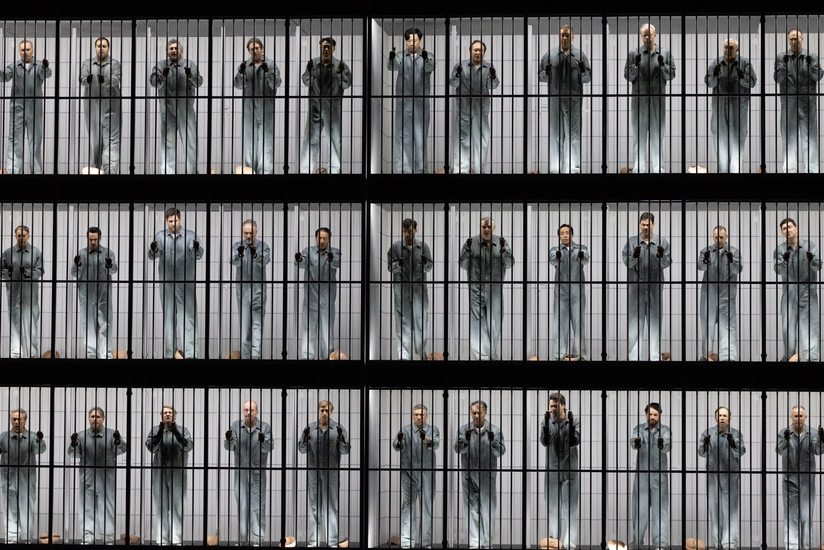
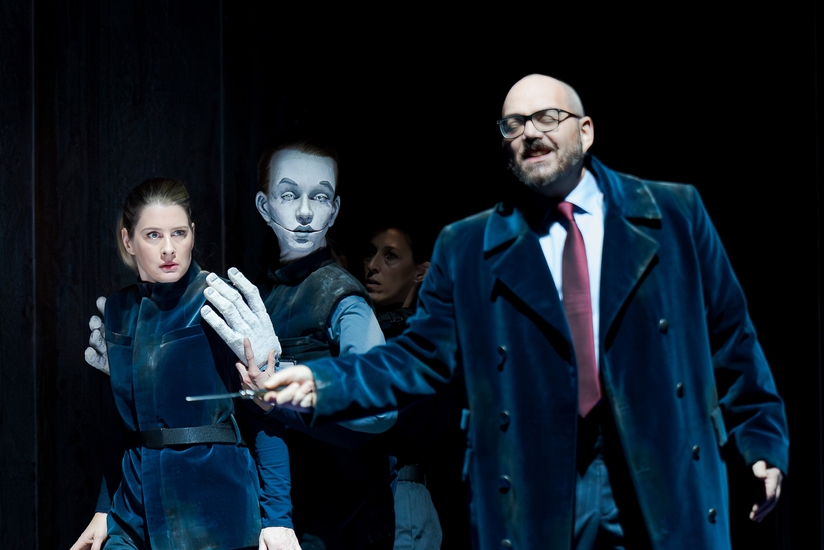
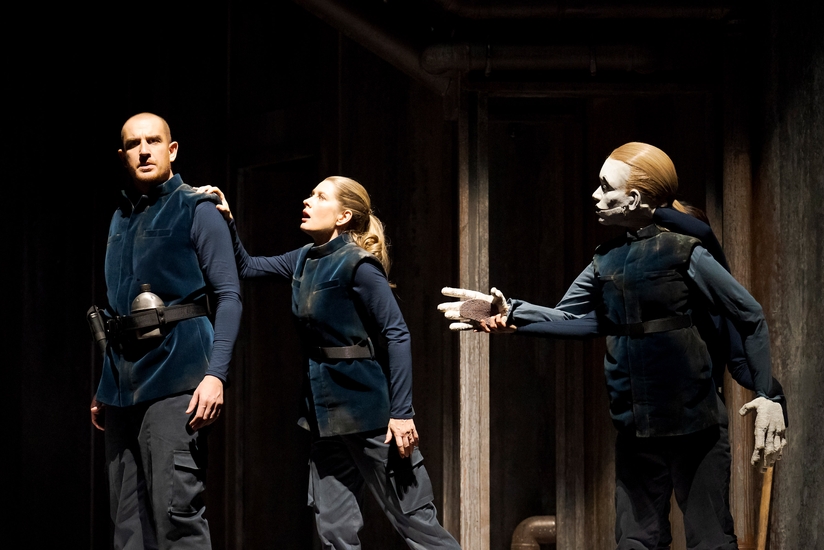
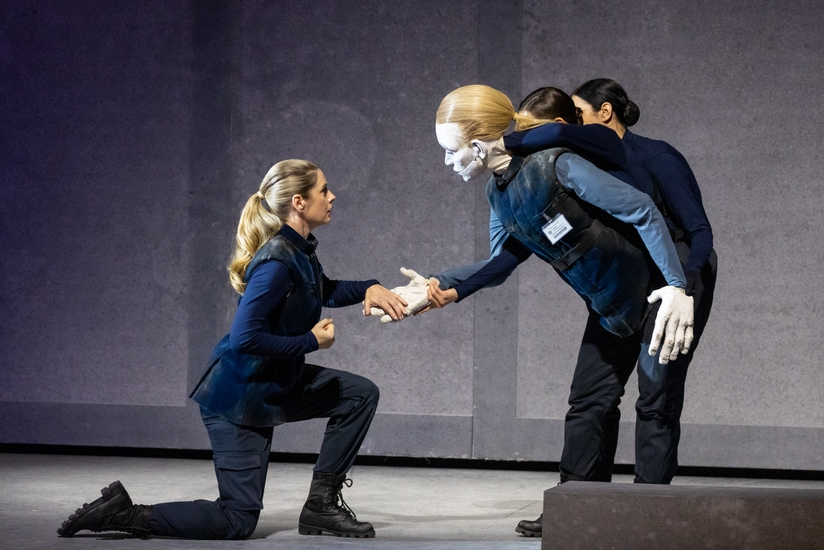
The production is stark, grey, and static. An interesting twist is that Leonore and Florestan are represented on stage by two larger-than-life puppets. This means that Leonore can be Fidelio and Leonore at the same time, which creates an interesting interplay with the character. Malin Byström is a Viking force on stage. Swedish (blond and beautiful), she has an interestingly deep timbre, almost like dark velvet, in her voice. Her roles include Tosca and Salome, both of which would be wonderful to hear her perform. While she is a bit static in her movements (perhaps part of the choreography), she is a masterful performer in this role. David Butt (should he really include this second name?) as Florestan is equally powerful – he made his debut at Sigmund in Die Walküre. Of course, the man is born to sing Wagner.

An interesting addition (perhaps a little bit of shine for the Vienna Philharmonic) is the inclusion of the Leonore 3 overture before the last act.

Beethoven wrote four Leonore overtures, with the third considered to be the most majestic. Riveting sounds filled the opera house, an incredible prelude to the most powerful last act where the prisoners are freed, singing the rousing “O welche Lust” (I remember us being below stage forever, waiting to come up and sing this somewhere in the 80s at the State Theatre in Pretoria). Triumphant!

Another Christmas market

Sunday. Austria goes stone cold dead on a Sunday. (As do Italy, Spain, and Portugal.) Deader than dead, like aliens came and took all life off Earth. I decide to visit the Jewish Museum and the villa of Gustav Klimt. (I remember vividly stumbling into a gallery with his work in 1985. What did I know about art? What did I know about anything for that matter? Afrikaanse kind van Heidelberg, geskool op Riversdal. No one taught us about art. I knew a few composers – the popular ones. And the scariest music teacher on Earth once made me play Bartók. I hated the atonal sounds, but got to like it once I mastered the piece. Anyway. I walked into a gallery and saw The Kiss by Klimt. I was completely overwhelmed and in awe. Over the years, my love for his work has grown into a deep love affair, in spite of the commercialization of it, and that in Vienna there are a billion touristy trinkets with his paintings on them: mugs, lighters, spectacle cases, scarves, even toilet paper.

The tram ride to the Villa is a sixteen-stop affair. I love the trams – they are always on time and a great way to people-watch and explore the city. AND – I am even offered a seat by youngsters! The perks of my age. I love it. But I love it even more to offer my seat to older persons, seeing how they appreciate it.

Last night on the tram home, three youngsters embarked with theatrical flair – I would think they are about sixteen. They flopped down next to a woman who I would think is about 85. Red beret, snazzy dresser, “with it!” She and I are equally gripped by the youngsters. The one sitting opposite us is good-looking (a boy) with a really huge mouth. He has braces on what looks like perfect teeth to me. He is extraordinarily camp, in a sweet way. The funniest thing is that his tongue has a complete life of its own. The more he talks with his hands, the wider he opens his mouth, pushing out his tongue. Once pushed out, the tongue does a full 360 degrees on the outside of his mouth. I am staring shamelessly. He notices me and the woman staring at him, which makes him even more animated.

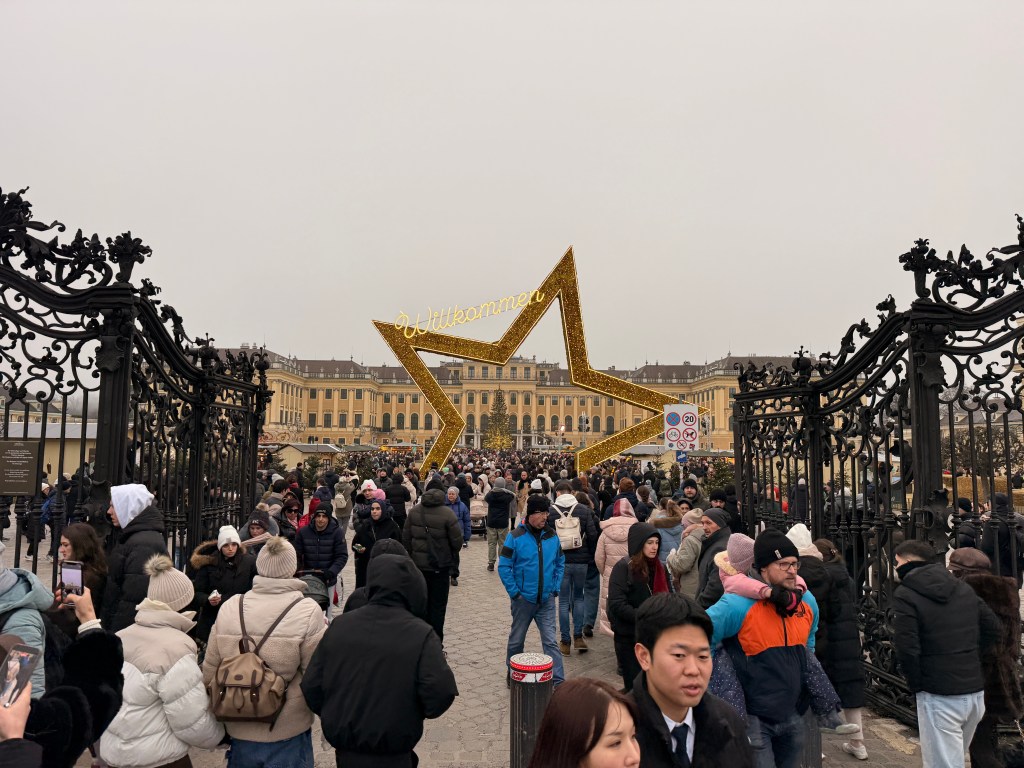
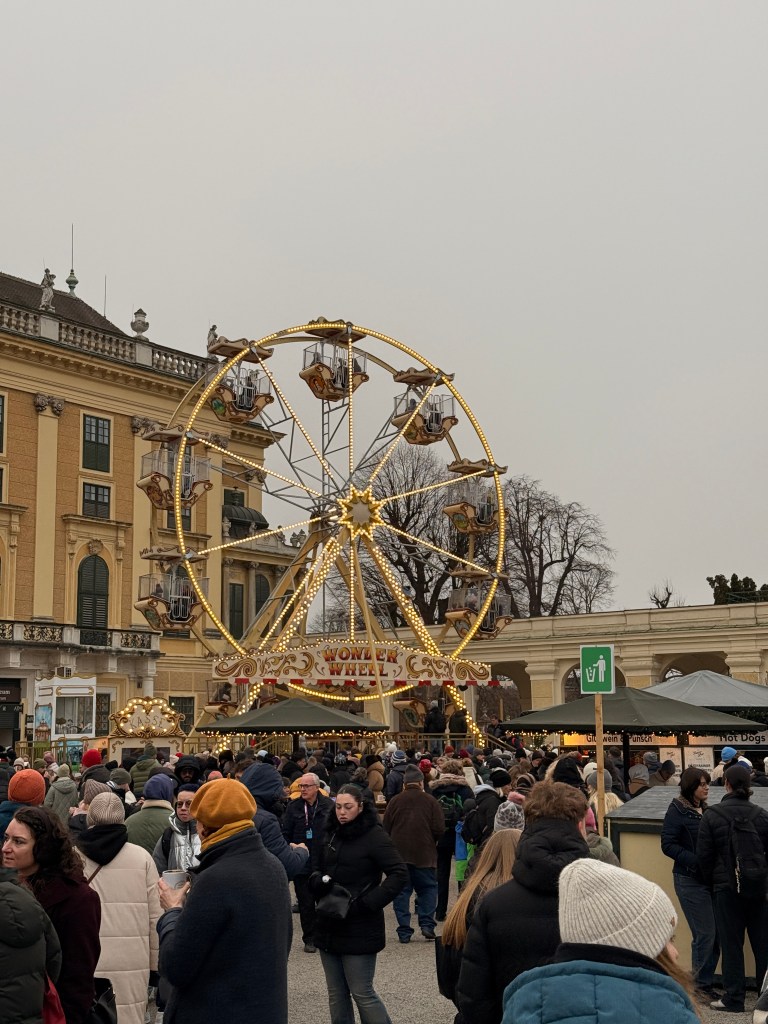
The route to Klimt’s Villa is evidence of a good neighborhood. Magnificent properties line the roads. His villa is a short walk from the tram. I arrive to a crowd of people – queuing (what a strange word) outside the Villa. I change my mind and decide to come in the week when it will hopefully be quieter. En route, we pass Schönbrunn Palace, and I am drawn to the massive Christmas market in front of the palace. By now I have seen it all…the trinkets, the wood carvings, the candles, the knitted wear (R600 for a beanie…) and all the wonderful food. Up until now I have been drawn to the Glühwein like a moth to a flame. Today I decide to be brave and try another punch: Orange and Lime, made with white wine. And Raclette – melted Swiss cheese served on the deepest yellow, butteriest potatoes imaginable. Topped with chives, gherkins, and crispy fried onions (this would seem to be a national treasure – I wrote about these during my previous visit to Vienna), it is the most perfect taste combination in comfort food. I am prepared to do another 16-stop tram ride just for this! The Orange/Lime punch is an exciting discovery – even though for a second I thought of MedLemon. It is crispy warm – if there is such a sensation – the perfect combination of sweet and tart with a little kick!

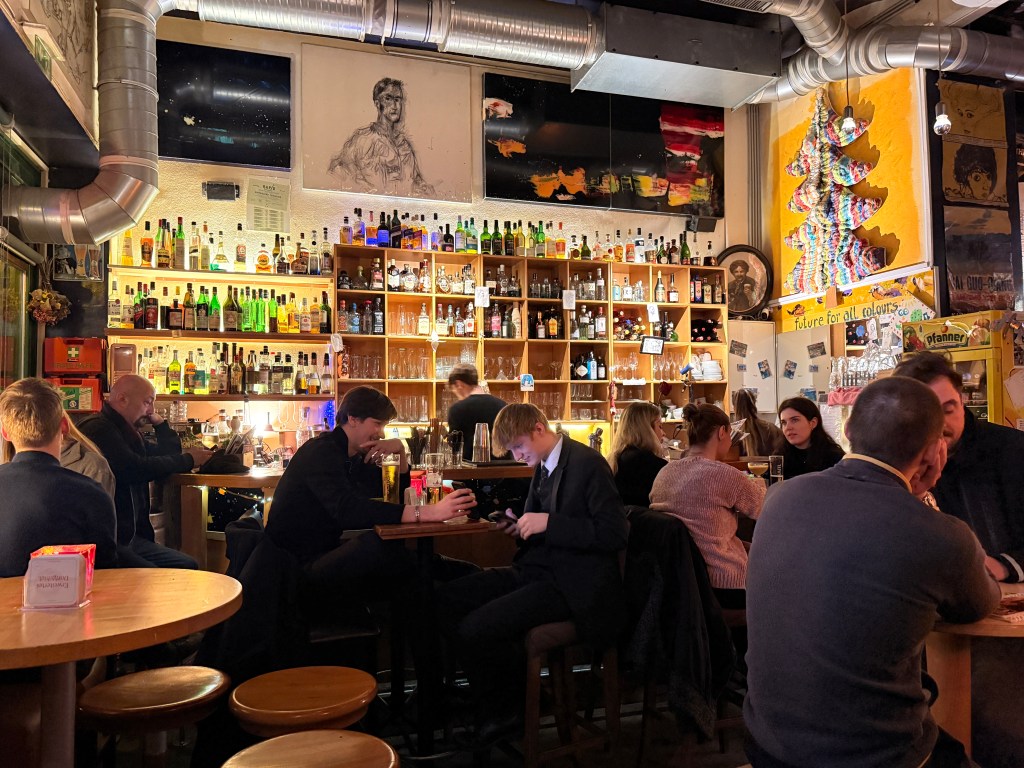
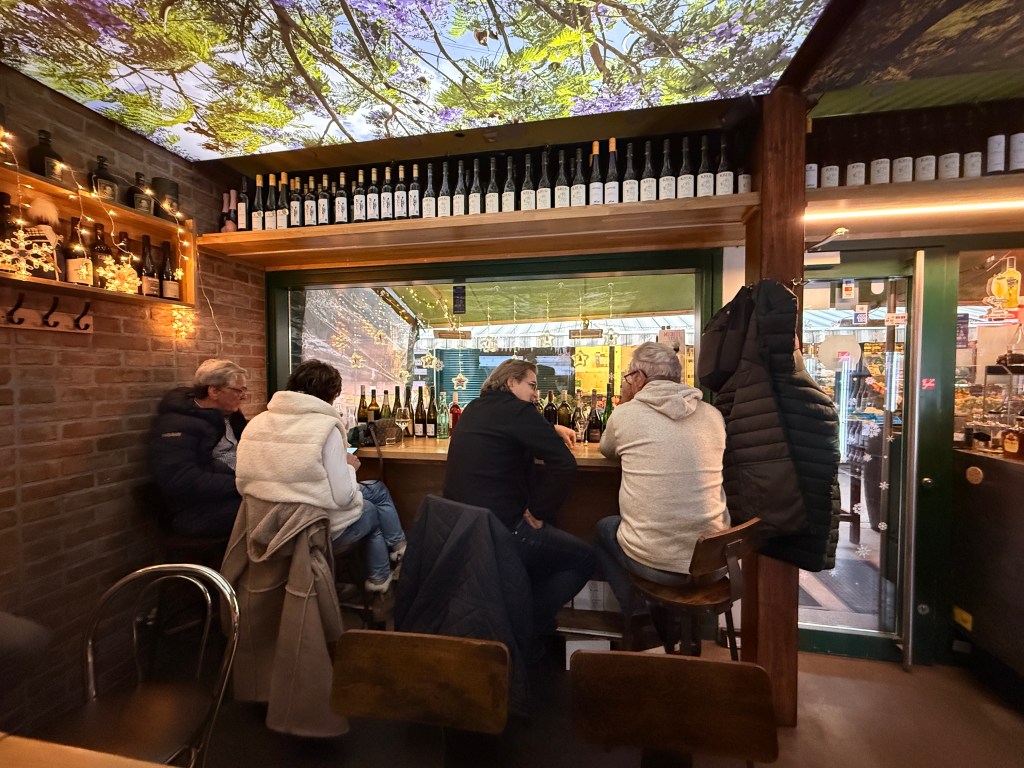
By now the tourists are streaming into Vienna – I hear Russian (or what sounds like Russian – could be anything) at all the markets. Yet, there is always a place for one in the little restaurants. I treat myself to escape into the little cosy pubs at night, mostly to rest my weary bones (which is a tale for another blog…). I am complimented on my German which makes me very confident – I am sure it is anything but perfect. But, I think the locals appreciate the effort. Last night I ducked into a little pub that was so crammed I had to sit beneath the coat rails, totally enveloped by warm coats, with a radiator at my back. Heaven, as the outside feel temperature was -4!

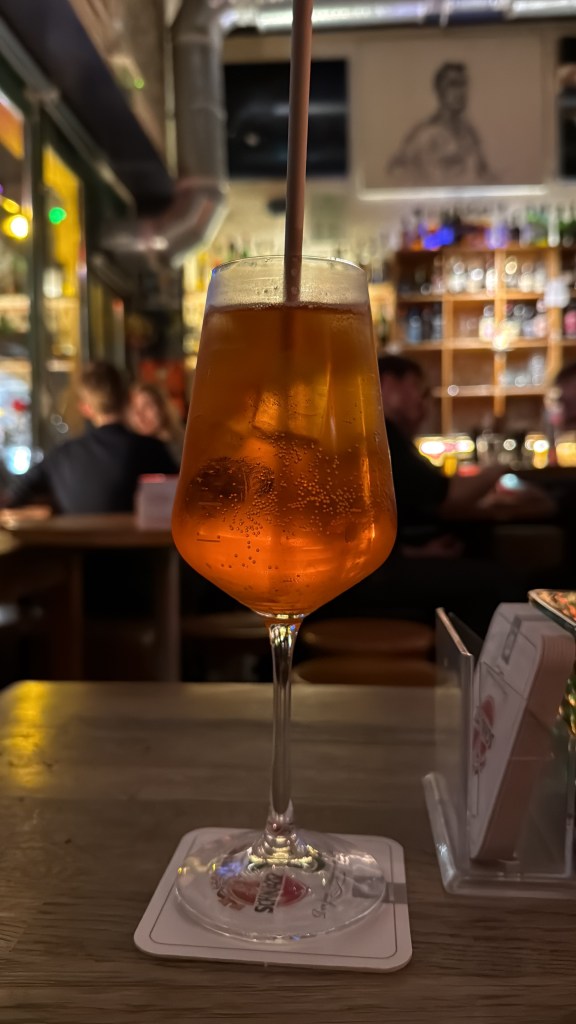
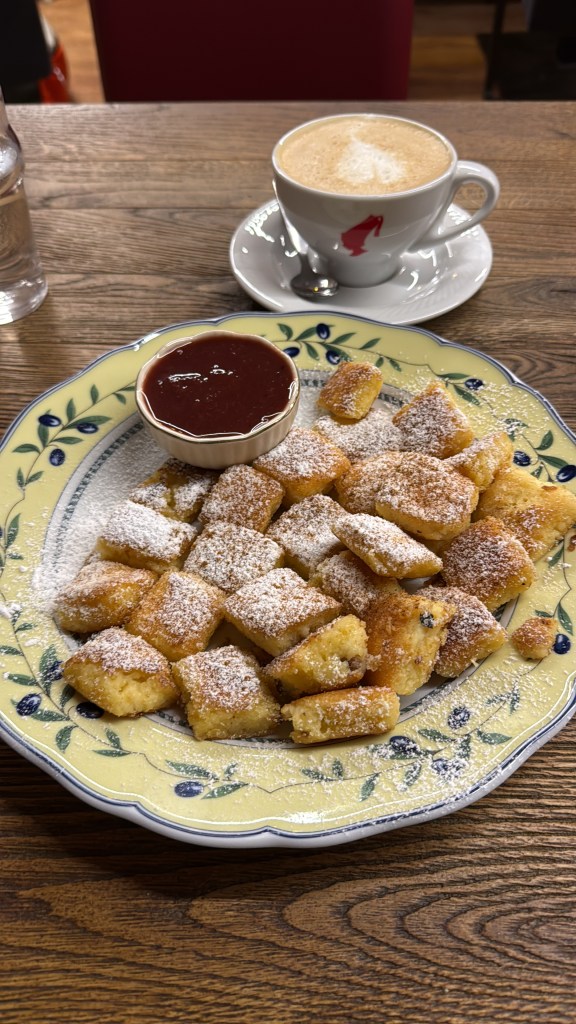
Aperol Spritz and an open toastie (that is what they call it as well) with more melted cheese and sun-dried tomatoes. The previous night I succumbed to a little café just off the busiest street (Mariahilferstrasse) and ordered Kaiserschmarrn. (I remember when I came to Austria with my mother – it was all she wanted to eat…). A light, fluffy pancake that is cut up, sprinkled with icing sugar, and served with a (usually) berry sauce.

There are hardly any vegetables in sight – something that always surprises me as the markets are brimming with the most wonderful fresh vegetables. In a restaurant or at the street food vendors, the best one can hope for is a potato. And then there is Spätzle – of all the local traditions most probably one of my favourits. (Well, perhaps a close second only to Krapfen.)

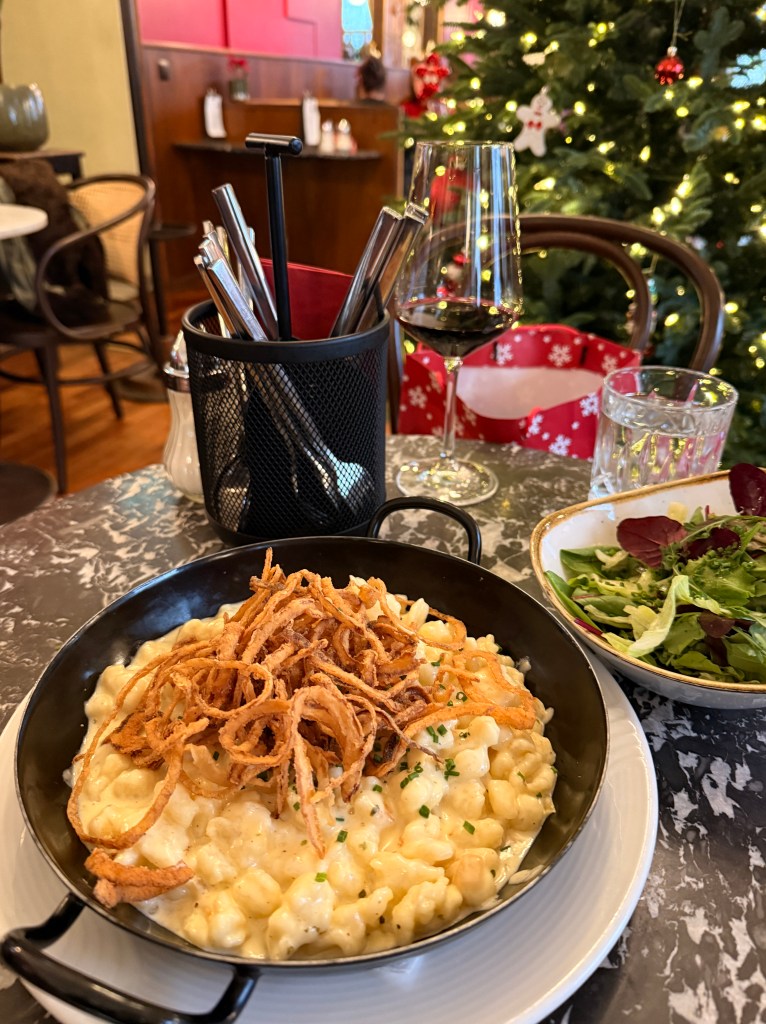
Spätzle – a type of egg pasta (called Nokedli in Hungary) is a typical Central European dish that is most common in Swabia and Alsace. The best way to eat this, for me, is with only cheese and these incredibly crispy onions, of course with a glass of red wine. It is very simple to make – basically a soft pasta dough that is chopped into fast boiling water. Yet, it is an art to make it so that it is not too glutinous. Chewy but not dense. It is also served as a side dish to meat, and in the lower part of Germany with a creamy lentil sauce.

Well now you know what I spend most of my time doing…
Impressions of Vienna

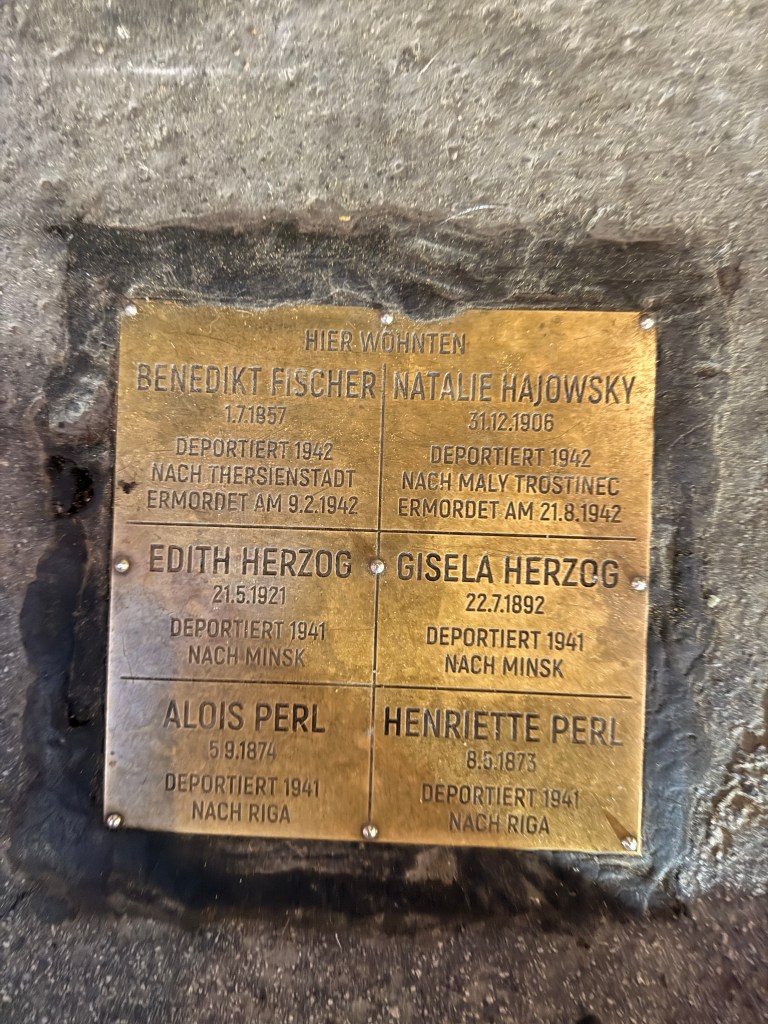
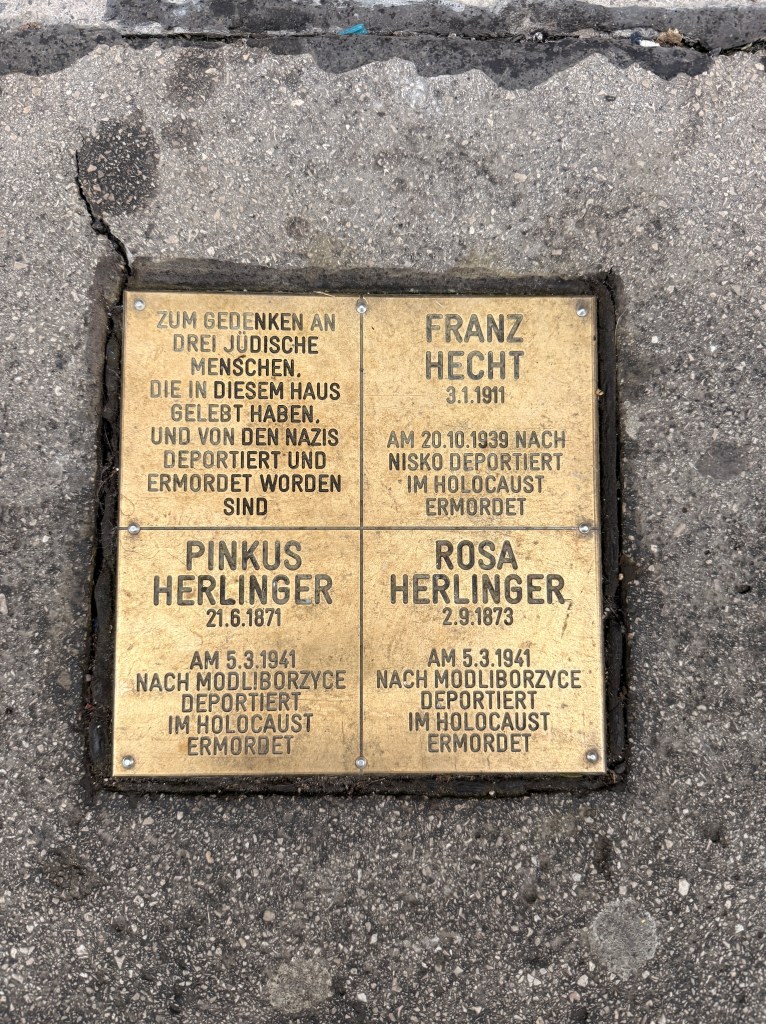
Gunter Demnig (born 27 October 1947) is a German artist. He is best known for his Stolperstein (“stumbling block”) memorials to the victims of Nazi persecution, including Jews, homosexuals, Romani and the disabled. The project places engraved brass stones in front of a former residence for a Holocaust victim who was deported and murdered by Nazi Germany. The memorial effort began in Germany and has since spread, with more than 100,000 stones placed across 26 countries in Europe.

I find these little stumbling blocks fascinating. I noticed them a few years ago for the first time, always having had a very strong emotional connection to the Holocaust. Only 10cm x 10cm, the little brass plaques are embedded in the sidewalks in front of the homes of victims who lost their lives. Each plaque has the name of the victim, their date of birth, and place of death, if known. The idea is that “a human being is only forgotten once their name is no longer mentioned/forgotten.” In Austria, these are also known as “Stones of Remembrance.” I wonder how many people actually notice them and what they think once they see them. The project started in 1992. In all my years of visiting Germany and Austria, I have yet to come across a person who is willing to speak about this part of their history. It would seem that they feel they have done their reparations, which in terms of history I suppose they have. Friends feel that they do not want their children to carry the guilt of the Holocaust with them. Rightly so. And yet, we now see how easily history can repeat itself.

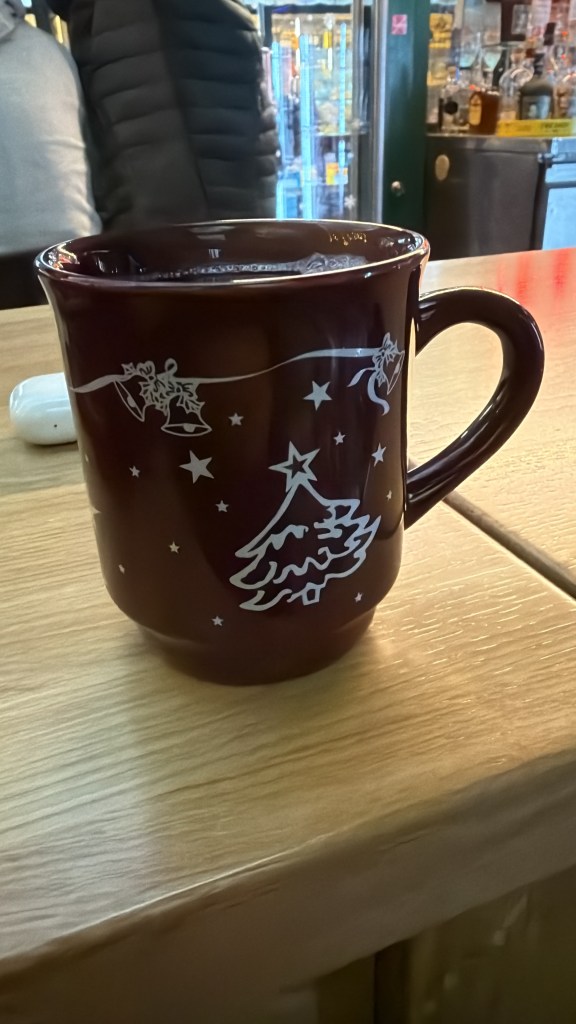
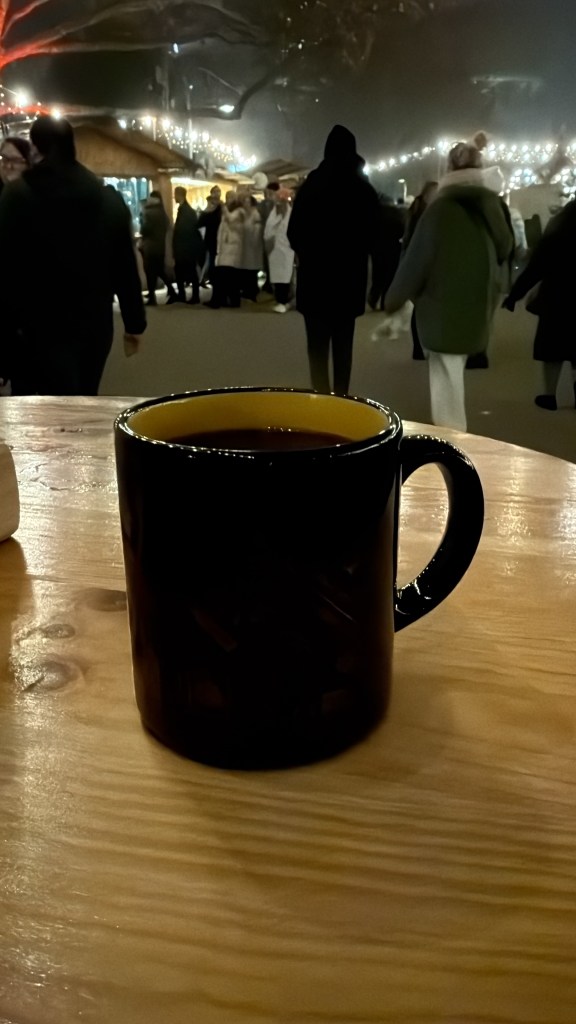
I wander the streets of Vienna trying to soak up the atmosphere, while mostly I soak up the bitter cold. It averages about 2 degrees during the day. As it gets dark in the late afternoon, it gets bitingly cold, and I thank God for Glühwein. People are out on the streets as if it is high summer, standing around high tables at the markets, drinking all sorts of warm punch and Glühwein—about ten different varieties. (I am still to try the other varieties, as I absolutely love the classic red wine with a hint of cinnamon, cloves, and orange.) It is served in fat-belly mugs, a 5 euro deposit per mug. It is delicious, warming me up from deep inside my belly. There are dogs everywhere—I cannot help but wonder if their poor feet are not frozen…
Christmas is taken to the next level with the Christmas Markets, selling mostly Christmassy stuff, but also local crafts like woodwork, candles, knitting, and other handicrafts. Music adds to the atmosphere and spirit of the season, but I do believe most people are like me—there for one reason only: Glühwein. Old and young hang about in the bitter cold, clutching the warm, fat-bellied mugs. People are generally really friendly, and I have been complimented a few times on my “good German,” which of course I find very funny as I learned to speak the Austrian dialect in 1985 in the kitchen of a guesthouse outside Salzburg with the Yugoslavian kitchen staff. Imagine!

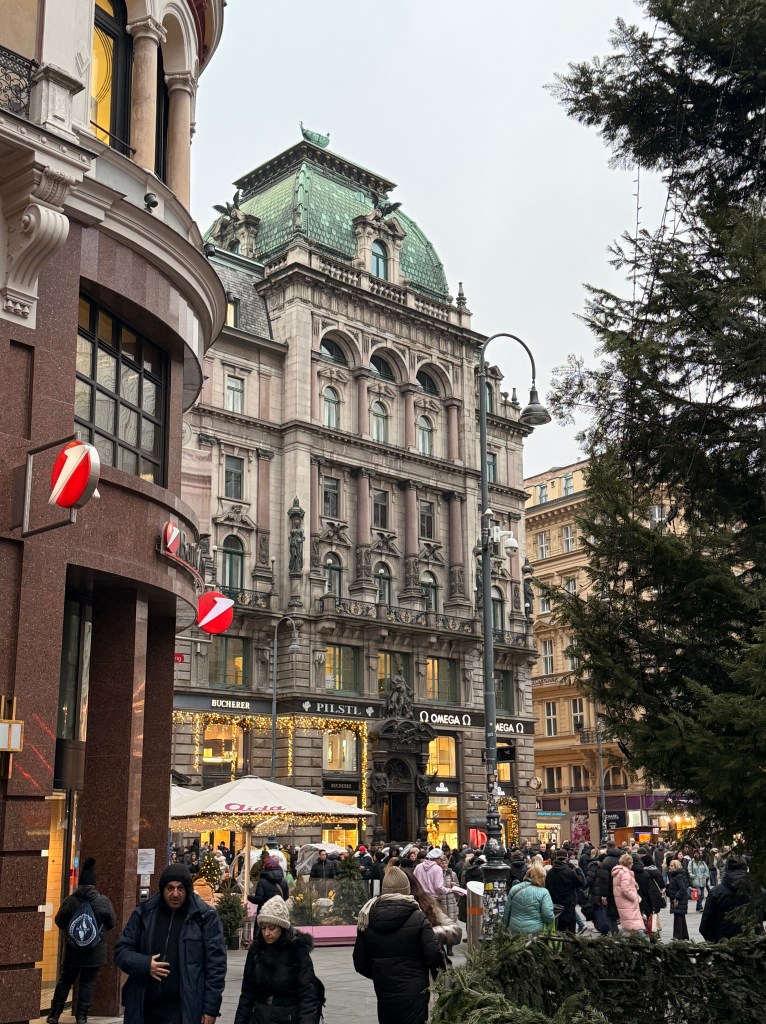
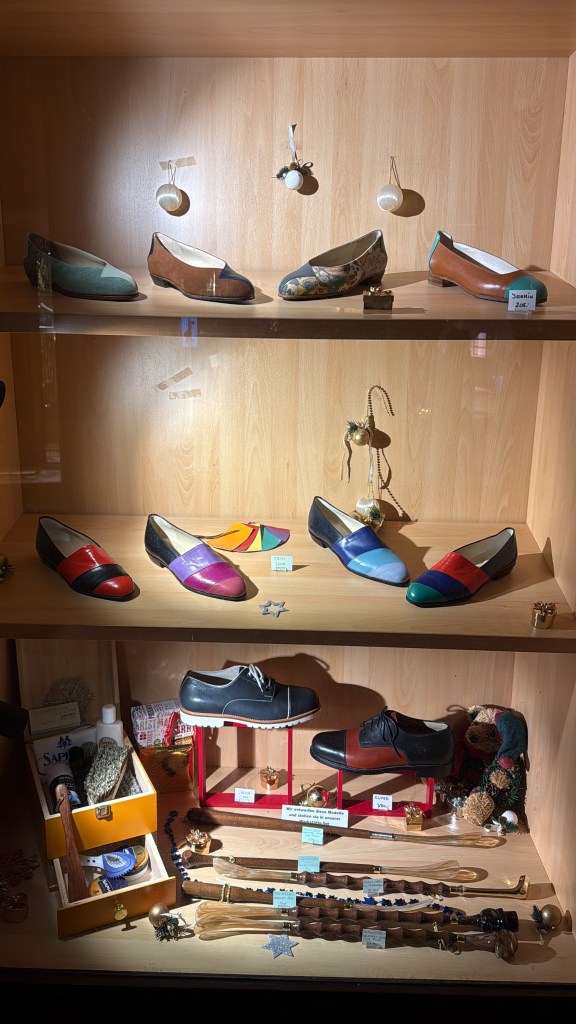
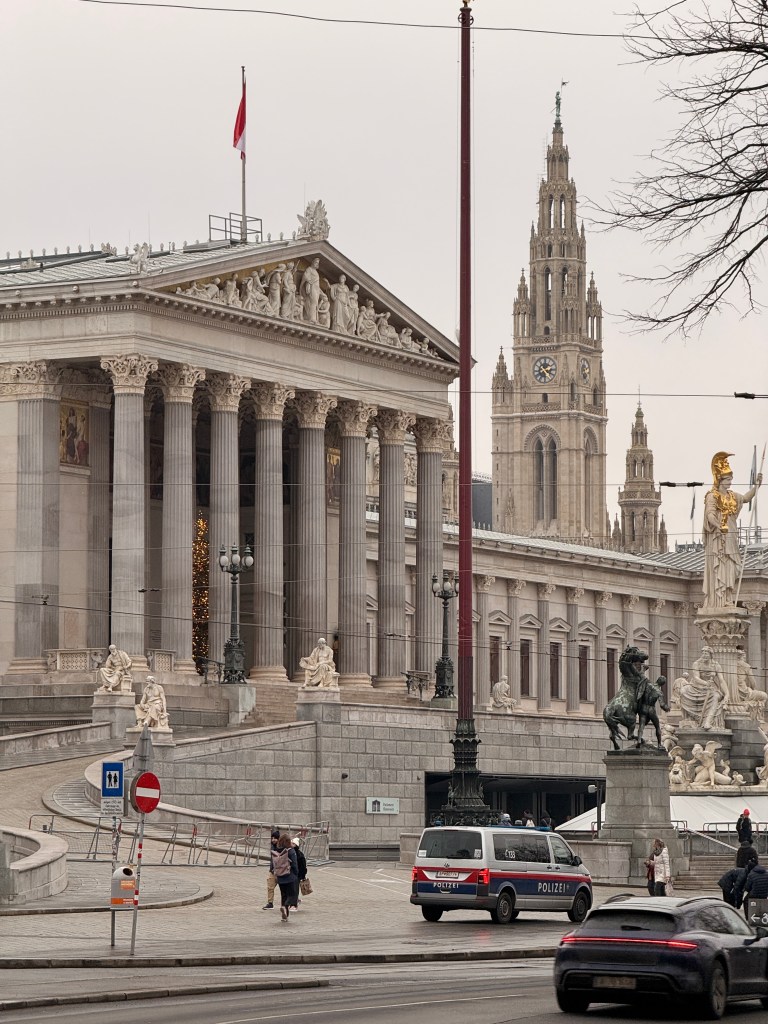
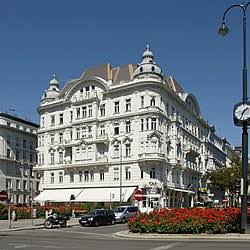
Again and again, I am aware of the sophistication of this city. The architecture, the layout of the streets and parks, the lamp lights ooze a sense of style and glamour that I suppose are still remnants of the Habsburg empire. I wander off the beaten track to areas that are not usually visited by tourists and am still astounded by the architecture. Imposing, elegant, majestic, imperial—buildings that remember, that carry a past that we can now only dream of, an empire so fixated on values of humanity. The municipal housing blocks were built not to become slums but to provide dignity to the poorest of the poor. The architecture is also cultivated to express music, philosophy, and culture right down to the design of a coffee shop. Shop windows are works of art.

An ode to the Coffee Shop

Ode to a Coffee Shop.

Why is it that Viennese coffee shops have such an air of distinction about them? (I am not talking the franchise type, of course.) There are a host of authentic coffee shops that have not only become major tourist attractions, they are globally recognised by UNESCO as “Intangible Cultural Heritage Sites”. I never knew this! Yet, walking into one of these establishments one feels the sense of culture that is enfolded inside. They are indeed the public living rooms of the Viennese, and as close as one would get to being invited into someone’s living room – “let’s meet at Café Prückel”.

There are many wonderful aspects to this cultural experience. For one, it is ok to linger. I suppose in earlier times it would be the place to sit and read, write a book, or have that deep conversation around the break-up of a marriage. Nowadays it is the prefect place to sit and work on a laptop or ipad, as one never feels rushed. The waiters are masters of their art. They manage the place by facial expressions – most of the time there is not a hint of a smile. A raised eyebrow shouts louder than a scream. Yet, they will never rush you, they most certainly do not come and ask if you are happy or satisfied with their food. They leave you alone. When they think you might deserve attention, they will simply slow down when approaching your table and make eye contact. Subtle…

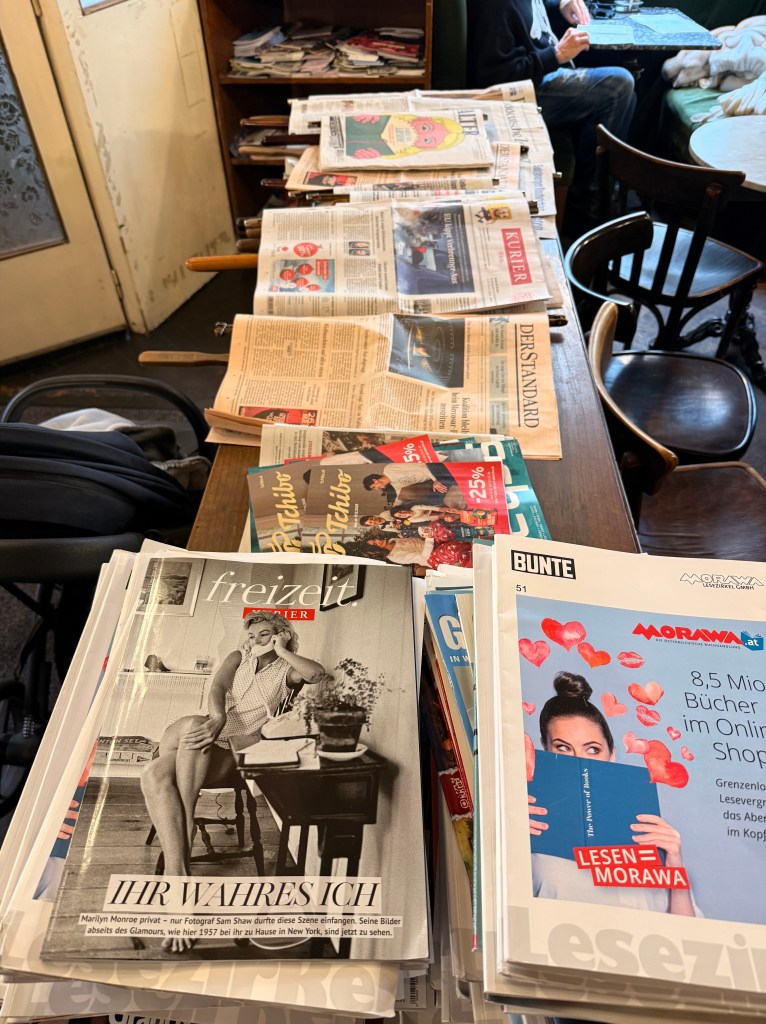
The coffeehouse unfolds as theatre—its décor a deliberate stage, its waiters quiet directors of the public, inviting us into a performance of our own making, exquisitely and almost imperceptibly choreographed. It creates a space to be in solitude, yet not alone. To have a private conversation in a place that feels safe and warm. The latest magazines to read and newspapers in wooden frames say “sit, relax, read, take your time…”

We know that some of the world’s greatest thinkers did their best writing and thinking in coffee shops – Freud being one of them. The Parisian coffee culture is where artists met, philosophers debated, and activists gathered in secret to plot their campaigns. A dear friend of mine’s husband was doing his PhD in Mathematics at the University of Bloemfontein. She told me that he did most of his best writing in coffee shops (I imagine Mugg and Bean in Bloemfontein). I remember my reaction – I thought it was the strangest idea ever! The noise? The constant hustle and bustle of people? Well, I tried it when writing up my own thesis and discovered it to be the best place to write! There are several coffee shops in Hout Bay where I would escape to write. It worked! Other than going to the bathroom, there were no distractions: not cats that want food/scratching/playing with pens on my desk. No garden to water or pencils to sharpen or fridge to unpack (I am the master of procrastination). And somehow, I did some of my best writing in the coffee shops!

As opulent as Vienna is on the surface, it presents an interesting tolerance and air of acceptance towards tourists, the homeless, and the outcasts. And dogs. There are so many dogs everywhere, and best of all is that they are welcome in even the grandest coffee shops! Like the Viennese, their dogs are sophisticated and incredibly well-behaved! Dressed in warm coats, they quietly lie down underneath tables, the smaller ones sitting on laps. I see the occasional snack being given from a plate. It is also evident that coffee shops create a space for older persons, many of whom I suppose are lonely. This is also their living room where they can be in the comfort and company of strangers. I watch them eat their apple strudel. Slowly. They read a paper while listening to the conversations around them. This indeed is perhaps the most important cultural role of the coffee house – creating a space for people to be in the presence of others without any expectations.

Café Prückel

My excitement about being in Vienna knows no bounds. I remember as a very small boy waking up in the morning, opening my eyes just a tiny bit to see if by any chance I was in Knysna with my grandparents. If I could focus peeping through my eyelashes and there were the white and red stripes of the curtains in the spare bedroom of my grandparents’ home, I would jump out of bed and dive into bed with my grandmother. (The stories of Knysna are in other blogs already.) I feel the same way here – I wake up every morning from a wonderful deep sleep, and in those first moments of waking (always reluctantly for me – I am not a morning person), I open my eyes to the most exciting discovery – I am in Vienna! I somehow cannot get used to the fact that this incredible privilege can be all mine.

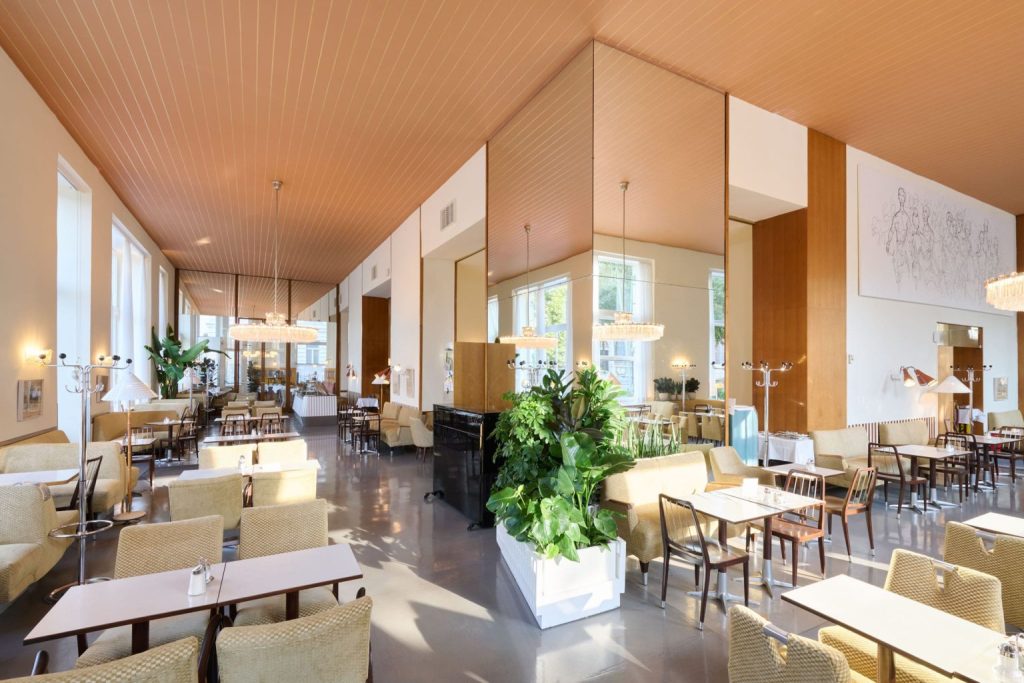
Today I met with a Ukranian academic who now lives in Vienna after a lifetime of working in field of ageing, mostly at the United Nations. We meet at one of the very typical Viennese Cafés, Café Prückel, to many considered their second livingroom in Vienna. Established in 1903 it makes on understand that UNESCO honoured Viennese Coffee Shop Culture as Intangible Cultural Heritage in 2011. Yes, that is how important Coffee Shop culture is in Vienna. Stylish, understated in 1950’s (what could be considered Swedish) decor, it oozes sophistication. No one dares just walking in and finding a table. The air of tradition keeps one glued to the doormat, like an obiedient dog that has been trained to not set foot off that mat. Waiters and runners (the former in uniform of black waistcoat, the latter in plain white shirts) make no effort to meet you at the door the minute you walk in. Trying to make eye contact is impossible, the art of ignoring this is highly evolved.

My host booked a table for us – the waiter eventually appears and in my best German I am proud to announce that we have a reservation for two people. Showing no appreciation for what I consider to be perfect German, he shows me to a table to sit in the meantime, as I am ten minutes early for the booked appointment time. Unforgivable, I see how my esteem is diminished. The undressing ritual starts – coat off, definitely cap off and hung on the very full coat stand. (I am not sure about the scarf etiquette, however, I decide to make my own rule as I love my bright orange pashmina.) Dead on 11h00 my host arrives and is shown to the reserved table which is now free. Of course.

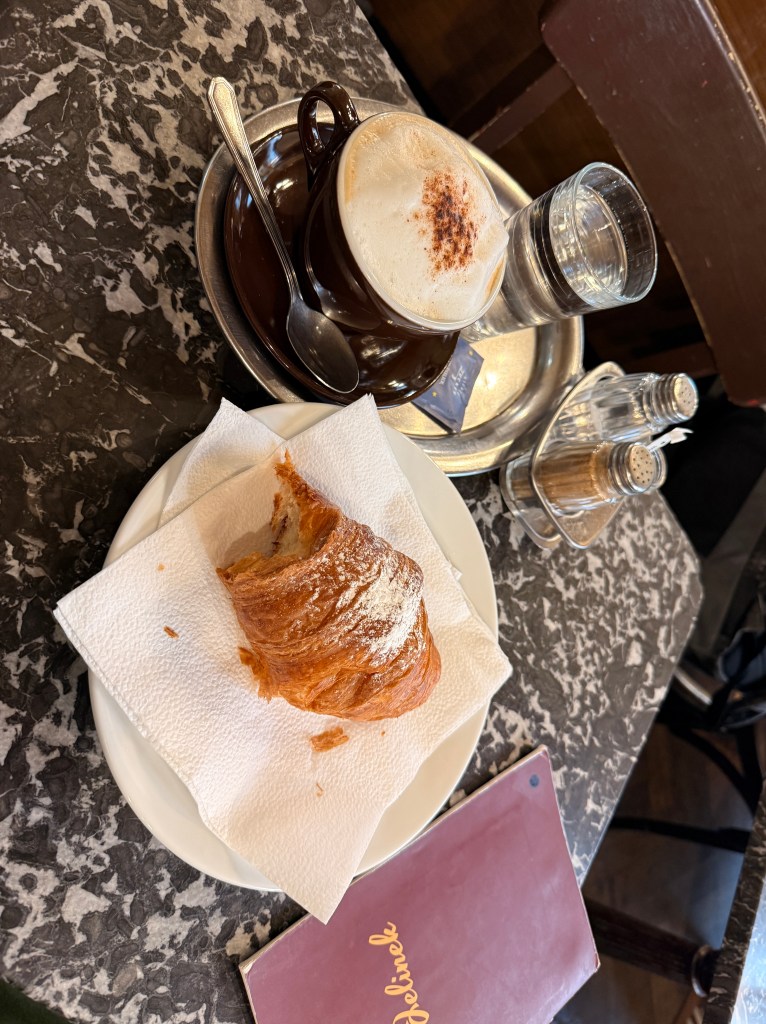
Our waiter is a man of middle age (meaning he is a bit older than me). Stern. In spite of my impeccable German (in my opinion, which I rehearsed on the way to the Café), he has to repeat our order with a frown just to make sure we understand that our German is still that of a foreigner. Coffee is served on a small, oval silver tray with a demi glass of water on the side. Always the water. Then enters the period of being completely ignored – you have your coffee, now shut up. We want to order two croissants. Catching his eye is impossible. I eventually do the most uncouth thing possible – raise my hand as he walks past. A sideways sneer with a hiss of “gleich” comes my way, followed by another few minutes of being ignored. Exasperated, he comes back; we order our croissants, feeling like schoolchildren who have been scolded for talking out of turn.

When the time comes to get the bill, I am too scared to even look at him. Yet, we manage to catch his eye and pay the bill. As he is about to take away the two little silver trays, he notices that neither of us had drunk our water. He puts the trays back, looks at us and says in perfect English “drink your water, it is good for you!” Like our school hostel matron when I was a child waiting for us to take our medicine, he stands watching us empty our two glasses of water. Very politely he smiles and thanks us for visiting. The next guests are already waiting for our table.

Hänsel und Gretel

So after all the hype about a follow-up to Madama Butterfly and leaving everyone in suspense, I realised that it was actually not so exciting after all. Yet, I will jazz it up to make it worth you while dear readers.

The Loge is a little box suspended on the sides of the opera house. Very grand, very small and intimate, where one most has to find an extortionist body pose to be able to see the stage. Bad design. There are three rows of chairs in the box – three in the front, two in the second row, and a really sad chair at the back. This person can most certainly not see a thing on stage. Also, the acoustics are rather strange from this angle, being directly above the wood instruments in the orchestra pit. While one can see every emotion of the conductor, the bellowing wood section can be quite overwhelming and drown out the voices.

In the front row was a couple whom I noticed as I arrived at the theatre, for the woman was strikingly beautiful. I would think she was in her 60s, jet black hair pulled back into a roll with a glittering clasp holding it in place. She wore no visible make-up except for a Maria Callas-style eyeliner. A string of pearls and a black velvet choker with a small diamond clasp around her neck perfectly complemented a black dress. Regal. Her husband was an ordinary-looking man with blow-dried hair. (Being so close up in the Loge I could not help notice…). They were to the left of the front row. In front of me and next to them was another woman, also in her 60’s, with the same jet black hair, but in a more casual style. The same no visible make-up, perfect pale skin, wearing a very stylishly tailored tweed jacket with a mandarin collar, silk blouse. Everything about both women spoke of style. (The other compatriots in the box were ordinary, myself included, compared to the two women.) I realise how attractive I find older women who wear their age with such style and grace.

During the interval the couple start speaking to the woman sitting in front of me. I hear her saying that she is from South Africa. The couple is very interested and asks her if she speaks Dutch, to which she replies that she is actually Afrikaans. Blow me away. Of course I ask her in Afrikaans “en waar kom jy vandaan?”. Houtbaai, nogal! We both laugh a lekker Afrikaanse gelag – what a small world! What are the chances that two people from Hout Bay end up at the opera in Vienna? After the opera I meet her husband who was sitting in another seat and we agree to have coffee once back home.

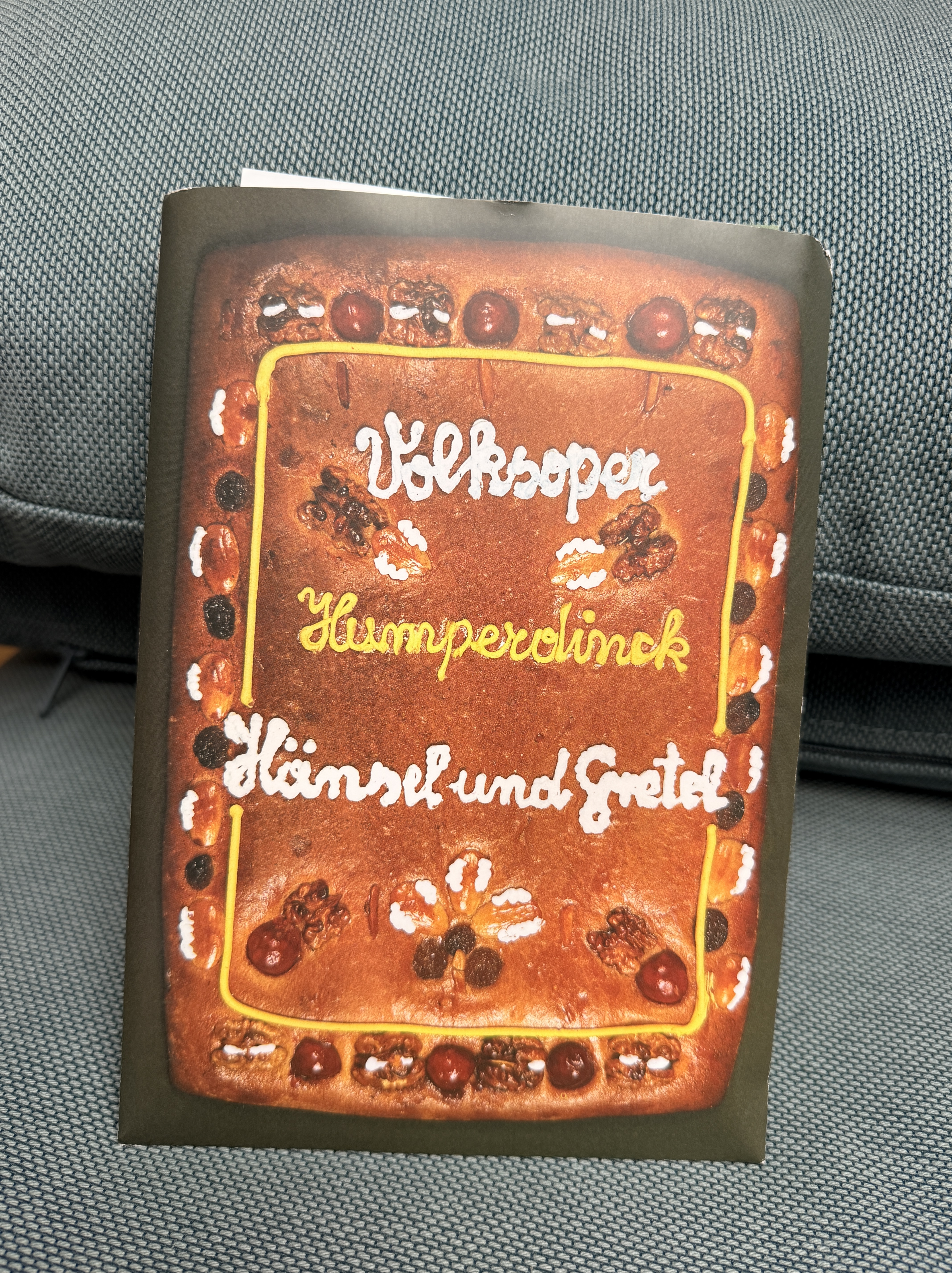
So last night I (and the entire kindergarten of Vienna with their grandmothers) attended Engelbert Humperdinck’s Hänsel und Gretel in der Volksoper. I saw this opera once before in London at the English National Opera and fell in love with it. At the time in London there was a mystery of some children that disappeared, so it was a rather sinister experience to be watching this opera on the same theme. (I remember also seeing Benjamin Britten’s Peter Grimes which was eqyually disturbing along the same theme.)

The Volksoper was buzzing with hundreds of little and not-so-little children. My heart sank, thinking of children back home in a cinema or a matinee of Sleeping Beauty on Ice… Considering the cost of a gin and tonic, I did consider doing a double to help me through this ordeal and calm me down. I recoiled at the price and decided to just go with the flow. Of course, German children are perhaps a little different from those at home. They were mostly impeccably dressed in corduroy trousers and shirts with collars. I was seated between two grandmothers with their very small grandchildren, both boys. They had raised seat cushions and were beyond excited. It was beautiful to watch the grandmothers explaining, reading the program to them, and chattering away.

The opera is a stark, German, (grim by Grimm) rendition of the fairy tale. (I remember as a child reading all the Grimm fairy tales in a thick, illustrated book from the local library. I was mesmerized, transported to the sights and sounds and tastes of every story.) The opera is anything but a fairy tale, with music set to match. It is a magnificent piece of psychological exploration of so many universal issues, with a complex musical score. The singers are challenged with an energetic vocal score. It is clear that Humperdinck had Wagner as a teacher, considering the dense and dramatic idiosyncrasies of the orchestration. There is enough tenderness and darkness mixed for any Wagnerian opera that perfectly matches the dark and light moments of the fairy tale. This is a rare example of a theatrical piece that speaks to both adults and children simultaneously.

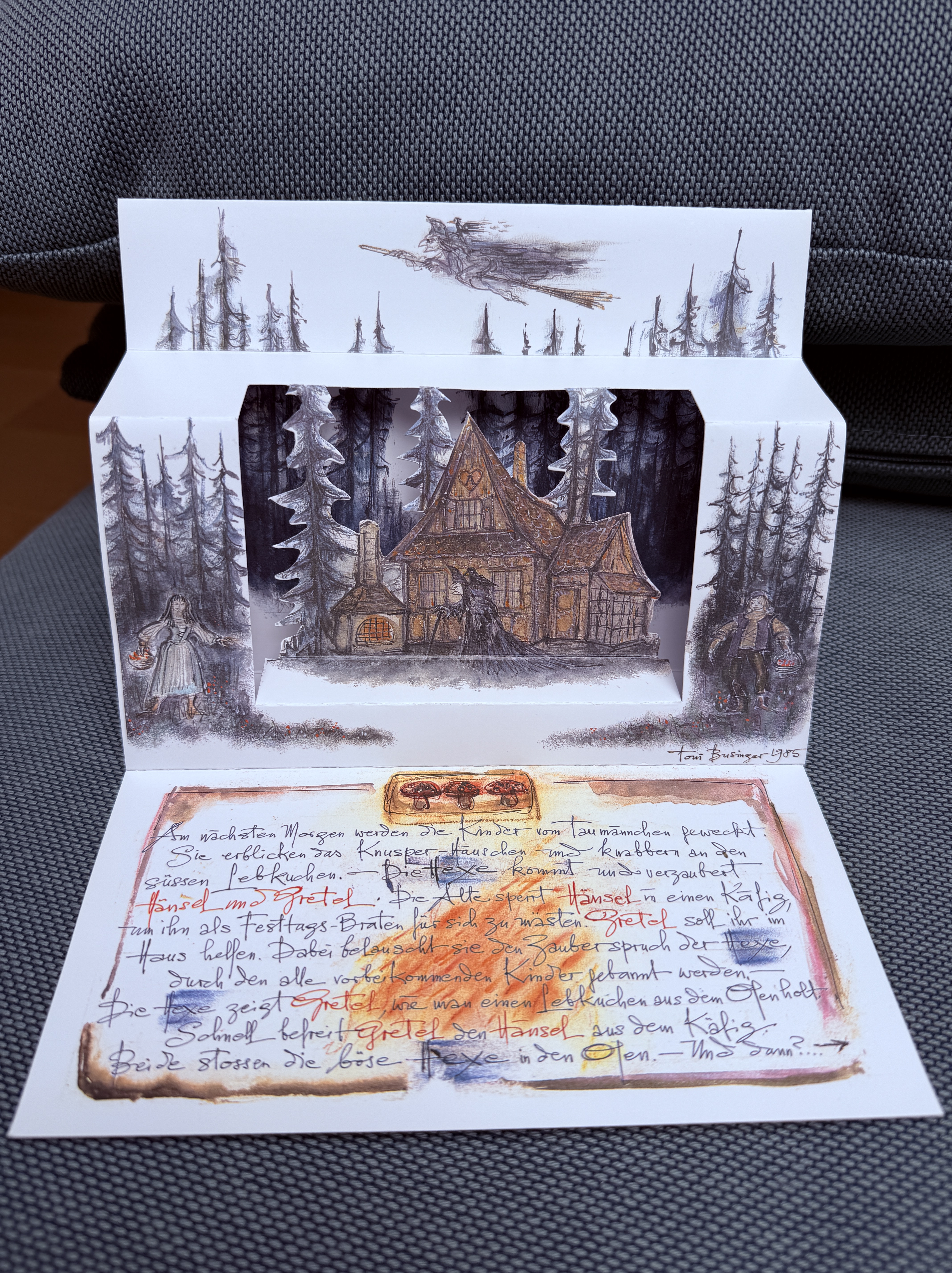
The little boys on either side of me were on the edge of their raised seat cushions. When the witch went flying on her broom across the breadth of the orchestra pit, I started applauding with them! We were trapped with Hänsel und Gretel by the magic of this wicked witch and her gingerbread house. I was captivated by all the themes that were woven into the fairy tale and so exquisitely harmonized within the deeply evocative music: vulnerability, care, social commentary on poverty (in contrast with the reality of sitting in an expensive seat at the Volksoper). Is there a moral to the story? Yes. The power of theatre, the magic of a story that was written in 1812 that resonates in 2025 and that speaks to the heart. (I wish I could chat to some of the children and hear what impression this made on them!)

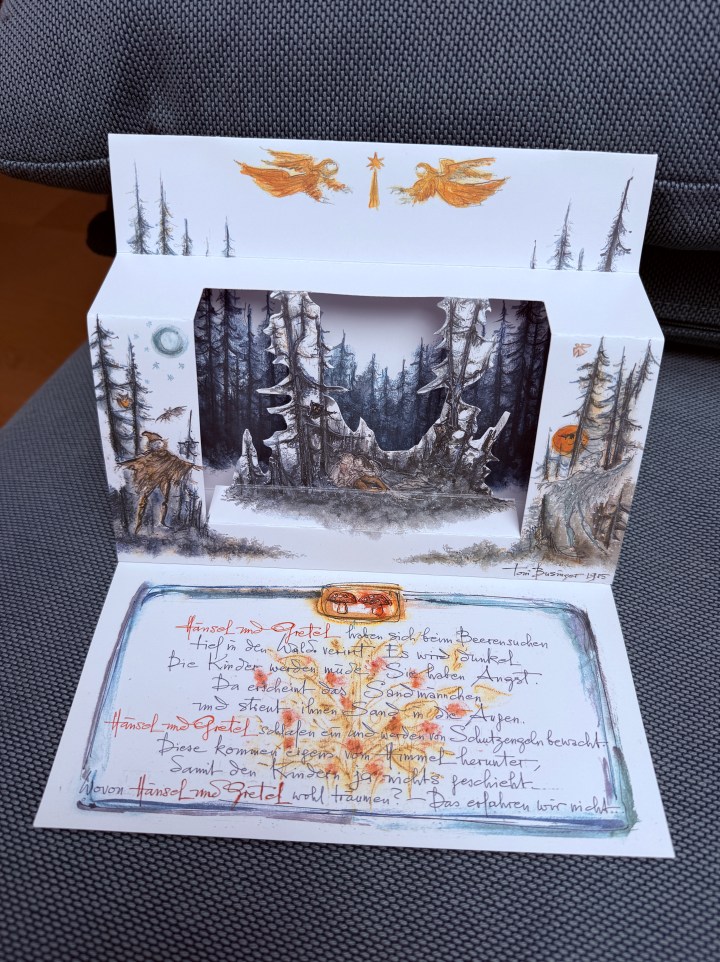
A little surprise pack with pop-up cards for each act inside

Madama Butterfly

I have often been mocked for my ability to wax lyrically and my habit of exaggeration. I have had just too many “the best meal of my life” to be taken seriously by friends, or having seen “the most beautiful thing ever” about five times a week… I recall the words of the first therapist I saw. I met her on my 19th birthday in Stellenbosch (18 September 1984) when my life was falling apart (for the first time – it happened many times subsequently). With her help, I decided to drop out of university (God, imagine if I became a Dutch Reformed dominee) and booked a ticket to Europe. Luxava. Flying from Cape Town to Johannesburg, then Nairobi, then Cairo, then Luxembourg. A free bus took me to München where I was supposed to meet a friend. (I think there is another blog on this epic Wagnerian drama in seven acts.) My point is this: the parting words of my therapist, “never lose your sense of wonderment.” Maybe it was more a spell (she was a kind of a witch) than a wish, for forty years later I have not lost any of my sense of wonderment. I laugh at my ability to be like a five-year-old boy. Last night at the Christmas Market on Rathaus Platz, I was tempted to play with the kids on the merry-go-round; I was so excited about being in Vienna!

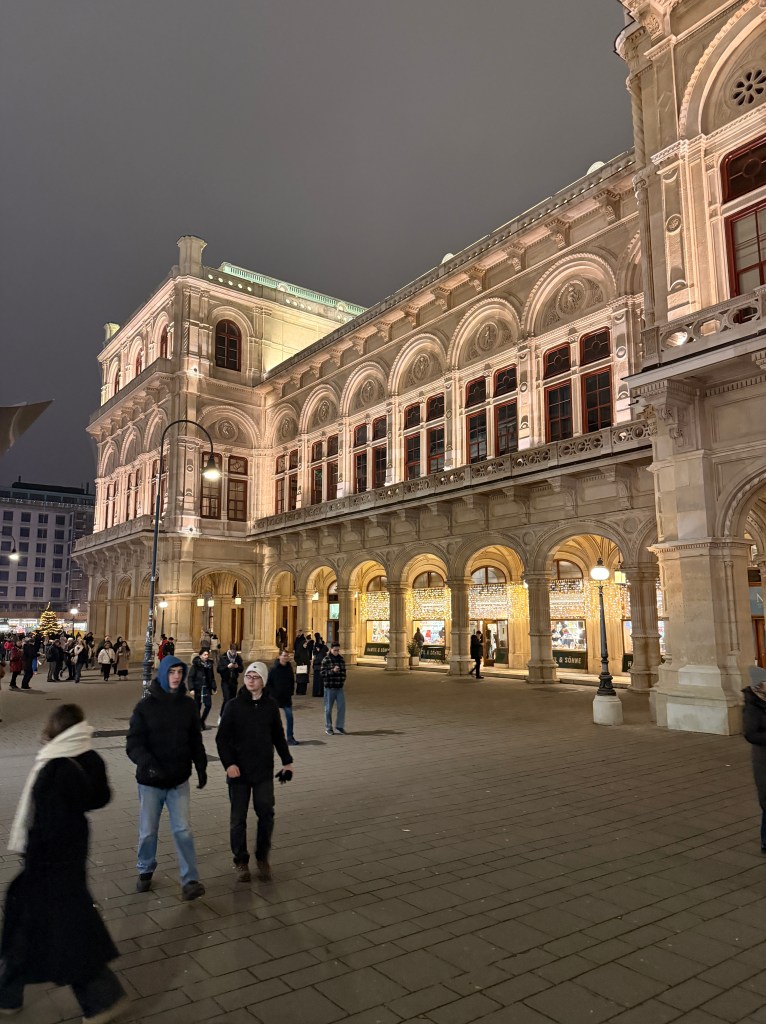
On a side note (and there is a blog on this story as well). I brought my Mother to Vienna a few years ago, when her cognitive impairment was already very real. We walked through the streets of Vienna also at this time of year. Every time we walked past the Vienna State Opera or any one of the iconic buildings, she would say “that is the most beautiful building I have ever seen”. I quickly realised that she said this about the same building we walked past half an hour ago – admittedly they do look similar in architecture – but never the less. It was the most beautiful building all over again, every time.

So I argued, reflected, and debated with myself on the price of tickets for the opera. They are excruciatingly expensive. I booked online about five times, only to cancel before paying when I saw what it translated to in the exchange rate. On the spur of the moment last night, I decided to go and see if there were return tickets available. One of the many “agents” outside the opera house offered me a ticket in a Loge for an amount that did not make my heart stop a beat. I bought it, immediately thinking that it might be a scam! I hung around outside, keeping an eye on him, wondering if I should take a photograph of him just in case. The doors opened at 18h00, and I found that my ticket was not only valid, but for a Loge right above the orchestra, in a relatively good spot.

The Vienna State Opera house (about to sway lyrically, skip if you want) was designed by August Sicard von Sicardsburg and Eduard von der Nüll, began in 1861 and opened with Mozart’s Don Giovanni in 1869. It is almost incomprehensible to think that it took only eight years to construct this monumental masterpiece. (Both architects died before the completion of the building; von der Nüll ended his own life [with a surname like that…] and Sicardsburg died from stress [all those bloody columns and arches, he should have known better] as a result of the public criticism from the Viennese who thought the building was not high enough and too squat). Of course, the building was bombed severely during WW2 and then again magnificently restored. It is said that the opera house embodies several deeper ideas: architecture as moral pedagogy (the building teaches how to move, gather, wait, listen, and attend – all the skills of civic life). Public culture as dignity (shared cultural good, not merely elite consumption [well, I am not so sure about that]). Memory and continuity (acting as architectural witnesses to empire, collapse, war, and renewal). I am intrigued by my own fascination with and attraction to this building. I remember standing in front of it in 1985 for the first time; I felt completely consumed by it, mesmerized, bewitched, transported. It holds so much of what the world has lost, of what needs to be lost, in everything that is wrong with the world juxtaposed with breathtaking beauty. Iconic in its symbolism, the architecture captivates the imagination. One cannot just saunter up that sweeping staircase; it demands a regal and cautious slow step. (I watch how people walk up and down this marble wonder; no slouching, no sauntering…)

There is so much memory and narrative in this aged construction, encapsulating a bygone world of wonderment. Ok, I will stop here. Go and make yourself a cup of tea because now I will tell you about Madama Butterfly, after that short introduction…

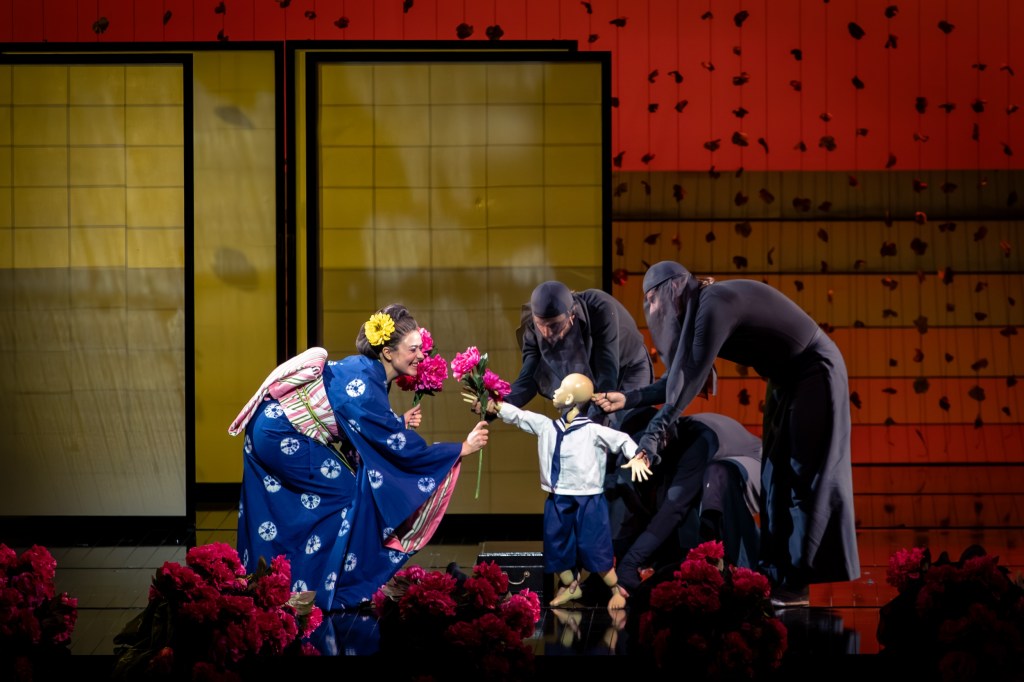
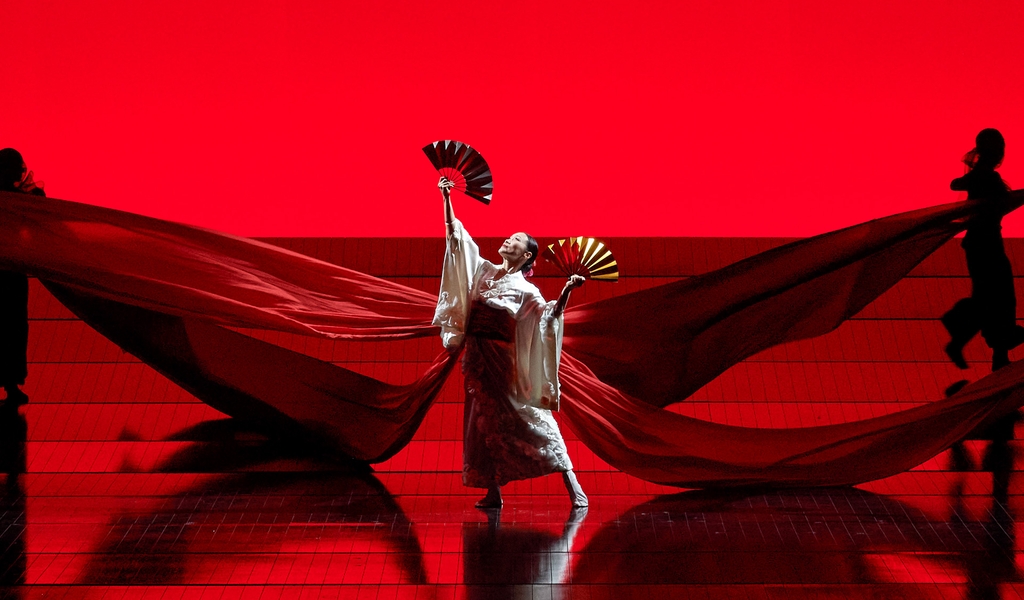
This production is by the famous Hollywood director Anthony Minghella, who died in 2008. (I have seen it before as a production at the Met in the cinema, but never as spectacular as this performance.) The choreography is done by Carolyn Choa, who was married to Minghella. For all the criticism of exoticist tendencies (I know, I know), it is a story that rings so deeply in the psyche of our colonialist world. The use of Bunraku-style puppetry (Butterfly’s little boy is a puppet with three visible puppeteers) somehow makes this little creature more real than any living little child I have seen over many, many performances can do. There is an audible gasp that went through the audience when this puppet boy appears. The pathos that emanates from this little creature holds such emotion; it honestly is almost too much to bear, yet it avoids sentimental realism. It is the symbolic that speaks louder than any sentimentality.

The power of this production is a completely bare stage with just a few Japanese sliding screens, creating a “radical minimalist space as emotional landscape” (ChatGpt) that is more psychological than what it is geographical. (I recall all the old sets of Japanese cherry blossom trees and fountains…). “Unlike many contemporary “director’s opera” approaches, Minghella’s Butterfly is:

  • not ironic
  • not deconstructed
  • not updated to a different era.

Instead, it is ethically attentive:

  • to gender
  • to power
  • to vulnerability
  • to silence.

The tragedy is allowed to stand – quietly, inexorably.”

Right, you get the message. I was in tears within ten minutes. The beautiful singing, the orchestra right beneath me playing with such tenderness and passion, the stage set, the building, all of it. And then at interval…(to be continued).

Tourists

I will not name nationalities, but had to laugh at this tourist whose “Gopro” does not react to her voice command. She starts off quite gently – “Gopro, take a picture”. Moment of silence, then slightly louder and more articulated – “Gopro, take a picture”. Silence. Then, articulated, agitated and louder – “GOPRO, TAKE A PICTURE!”. She did not see me, and I was so tempted to shout back “piss off, I do not want to take another picture!” As if it is not enough that they feel a desperate urge to talk all the bloody time, they now have gadgets which they have to talk to as well! Gopro cameras, cellular phones, watches. I give up!

Positano lured us into staying one more night. Our plan was to start moving back toward Rome today, but we succumbed to the beauty and atmosphere of beautiful Positano and decided to stay one more night. Our new Air B&B overlooks the ocean, and has a wonderful deck from which to drink in this spectacular view. The room has the pinkest tiles I have ever seen, and candlewick bedspread exactly like the ones my Grandmother had. It is located high up against the mountain with a zillion stairs leading down to the ocean.

We had all good intentions to have a braai at our home last night. There was a big built in braai with loads of wood. After two Aperol Spritz and a swim, we were simply too lazy to make the effort and settled for our by now favourite little spot. Typical holiday makers we are now familiar with the waiters, who make sure that we get a good table and half decent service. (I do feel incredibly sorry for the waiting staff having to put up with the stupidity of the average tourist – not speaking the language, not making an effort, being impatient, and some just being plain rude!). In all my years of travelling, I have been astounded by tourists. 

My first experience of the tourist phenomena was in 1984, when I worked as a general worker in a guesthouse just outside Salzberg – Pension Christl. In the days before the internet and Tripadvisor, Frommer’s “Europe on $20 a day” was the guide book to have. (There was also a cheaper backpacker version, the name of which I now forget). Pension Christl was given a very good rating by Frommer’s, who made special mention of the poodle Blackie. Clearly Frommer did not do his homework that well, because by the time I arrived at Pension Christl Blacky was long dead. Frau Christl was a middle aged, neurotic soul who loved money. Every morning she would grab the notes, kiss it passionately and stick it very deep into her ample bosom. Having said that, she was not stingy, and us poor staff regularly got special treats like strawberry cakes. 

I was the only person in the Pension who could speak English, which admittedly was not really good either, as I grew up in small town South Africa where we hardly ever heard or spoke English. I made the beds, cleaned the house, made breakfast, drove guests to and from the station. My main job was to go to the station early every morning and lure guests to come and stay at Pension Christl. I hated this part of the job with an unspeakable hatred. Firstly I felt like a stalker – and the reaction of the average person being stalked is not kind. Secondly, stalking was forbidden on the station. Considering the fact that I was working illegally, I was a prime target for the police! So – I spent my days dodging the station police, lurking behind pillars, jumping at unsuspecting tourists asking them if they are looking for accommodation. Nine out of ten times I was rudely brushed off, every now and then I caught one. Armed with the copy of Frommer’s, I then had to go to the public telephone, phone the house and get Tony to come and collect my prey. 

Tony was from Yugoslavia and stayed somewhere deep in the basement of the Pension. He had the face of a Troll, all squashed up like a Pug snorting for every breath. He always had a three day old beard and smelled of sweat and cigarettes, driving a scooter at the speed of light. Not the picture that creates confidence in neurotic guests that by now have been waiting with you at the telephone booth for fifteen minutes. Some just walked away – others I promised on my life that it was a beautiful place and that they would not be abducted by the Troll. Usually I would get the green light from Tony when the house was full – of course feeling like a total failure by 20h00 in the evening sometimes when I did not manage to succeed. (Tony killed himself in a scooter accident a few years after I left).

Every night it was my privelege to play the video cassette of “The Sound of Music”, as most tourists would go on a tour to the sights where some of the film was shot in and around Salzburg. Every night the same routine – tears and snot as the Von Trapps are finally free of the Nazis. 

There were two other permanent staff members – Desanka and a wiry young man of different abilities whose name I also forget. Both were from Yugoslawia, both annoyed me endlessly. What annoyed me more was the rudeness and utter stupidity of the tourists – I remember keeping a journal of their questions and comments. We decided that most people leave their brains at home when they travel. Be that as it may – I learnt about humility and patience which after almost 33 years I have still not mastered! I had some good times – especially with the Australian and NZ guests. Somehow our sense of humour connected, and I remember having amazing times at the Stiegl Cellar with them. Having spent most of my life this far in the service industry, I have a very sensitive ear for people who talk down to service staff… (Fascinating that half an hour after writing this I read in Brene Brown’s “Daring Greatly” about disconnection and the I – it relationship, when people treat others like objects. She refers to her own experience of being a waitress, and how humiliating it is when people do not see you as a person. Synchronicity remains one of the most fascinating things to me – how if our hearts and minds are open we recieve what we need from the Universe!).

Reading this again brings me to what it must feel like being old and vulnerable, not being seen or heard. Becoming disconnected. Is this not the root of all the anxiety of ageing? Loosing a sense of purpose, not being able to contribute (without judgement). Being shamed for not living up to expectations, being too slow. I cannot forget the image of the lady struggling up the stairs, alone going who knows where. And subsequently I have noticed so many Elders – sitting down to catch a breath, children being impatient because they did not hear the first time. A woman struggling on the Parthway of the Gods apologizing profusely for slowing us down – only to have me patronizingly tell her “don’t worry, it is not a problem at all”. Yea right – not for me. I could sense her feeling ashamed and embarrased. Nothing I said was going to change that.

Back to Positano – our last supper is again at the restaurant with the beautiful view. (Ok ok I know – most have that. But this one has a spectacular setting perched high above the ocean). Our waiter (to whom we were very kind before) makes sure we get the best table in the house, and indeed the best service. Our starter of a mixed platter of antipasta is laden with deep fried zuchinni, strips of prosciutto, a fresh ball of mozarella and a generous serving of melanzane parmigiano, topped with the freshest basil and rocket leaves. This plate in itself, even shared, is a full supper! Victor goes for Pasta Vongole (clams) and I dare to take the Tagliatelle Porcini. Dare, because I know exactly how rich it will be. And it does not disappoint! The texture of the porcini mushrooms is by itself enough to make you want do dig your head into the plate and slurp them up. The unique texture combined with a taste that does not compare to anything one could possibly describe in words make for the most heavenly meal imaginable. And – we hit the jackpot with a bottle of wine selected purely by price. (We have learnt our lesson with the vino della casa – wine of the house. I think they collect all the leftover wine and combine it in trough for that purpose). So – we go for one up from the cheapest, which in terms of the exchange rate is still bloody expensive – but worth every cent! It guides and compliments the meal, opening every possible taste bud to enhance the experience of being in heaven. 

We vow to cook like this again – in our vegetarian days we used to make the most delicious Italian food. Home-made pasta with delicate sauces, grilled vegetables and tempura delicacies. Then we started eating meat again and all the subtlety disappeared on the braai!

Sentiero degli Dei

The Pathway of the Gods. So we are up very early. Before 07h00 we are at the bus stop. Now even on a work day, that is early for me. I am not a morning person, although I have learnt in the past two years to get up early. I have not learnt to climb 400 stairs before breakfast. Yes, that is how many stairs there are between us and the road where we would catch the bus. And they are steep, a premonition of things to come…

In spite of the early hour, life is busy out on the streets. The local baker is delivering trys of freshy baked pastries. Let’s pause here – the pastries are something to behold. I remember the first timeI stumbled across Italian pastry. Vernazza, 2005. A tiny little shop on the steep hill up to our apartment. Sicilian cheese pastry – the most delicate layers of pastry, not puff. Paperthin layers of crisp pastry, that serves as a container for the most divine cream cheese filling. Not just any old cream cheese, a light, smooth textured cheese filling that escapes the corners of your mouth and the pastry casing. As if it is dying to burst out of captivity, the cheese just oozes out. Desperate gulps will suffice to prevent any of this heavenly filling to end up on the floor. Messy. Life is really messy sometimes. Where was I?

Oh, early morning at the bus stop. Italian men love sitting on the side walk watching the world go by. (In fact so do Portuguese, Spanish and Turkish men.) Here they are all lined up on a low wall, greeting everyone going to work (I would assume most of them are retired). There are jovial “buon giornos” and “ciao ciaos” to the unfortunate ones who still have to work. Scooters fly past – the smell of soap, shampoo and eau de cologne wafting behind the drivers. (Of course the smell is often very different in the late afternoon. It is hot and sweaty in summer…). The street sweeper is out arranging the debris of the day before for the little motor that comes along with its two crab-like brushes devouring all the cigarette butts, bus tickets and remnant of those whose mothers did not teach them not to litter. (This of course calls for an entirely new blog. Some other time).

Our bus to Amalfi arrives. It is a BIG bus – makes no sense to me that they do not have very narrow busses here. The squeeze to get other busses and cars and taxis and scooters past this one without wiping them out speaks of immense driving skill. Every time we pass another pass it literally feels as if I have to suck in my stomach, which after three weeks of pasta is no mean feat! You can hear the whole bus suck in their breath as another bus comes hurtling towards us, a huge sigh of relief as we survive another near death experience. In Amalfi we get a smaller bus, thank God. Because now we start climbing the mountain. The roads are narrower still, the drivers faster still. Early morning deliveries, scooters scootering to work – a mother and father with a small child clutched between them on a 125cc scooter going downhill at the speed of light. The path of the Gods must have special protection for the Italian souls.

Algero, the little village where we start our walk, is indeed right up there in the sky near the Gods 635 metres above sea level. Legend has it that the Gods came down on this path to reach the sea where the sirens lived that tried to seduce Ulysses with their singing. We walk from Agerola to Nocelle. Words again fail me to describe the scenery. In Agerola we stock up for the road – ciabatta with thickly sliced, fresh mozarella and thinly sliced sweet prosciutto that melts in the mouth. (We were warned by Tripadvisor that we will not be alone on the path. I will spare the reader our irritation with some people on the path…)

The track is quite easy, even though at times it seems that the slip of a foot would bring one to a very very steep fall to death. The views are worth dying for. Literally – I cannot help thinking that should I fall to my death, it would be fitting of a life well lived. On the rare moments that the Trump supporters are out of earshot, the silence is tangible. It takes us about two and a half hours to get to Nocelle where we gulp through two ice cold beers in a quaint little pub perched against the mountain cliffs. (The owner has a donkey that makes the most unbelievable sound possible. At first I thougth a small child was being strangled – hoping it was the one walking with her cellphone playing music on this sacred track. We then realised on the exhale that it was a true donkey sound.)

The busride back is no less scary. By now it is fun to watch the faces of the first time tourists on the bus. Siesta is calling, the soul renewed.