Another Christmas market

Sunday. Austria goes stone cold dead on a Sunday. (As do Italy, Spain, and Portugal.) Deader than dead, like aliens came and took all life off Earth. I decide to visit the Jewish Museum and the villa of Gustav Klimt. (I remember vividly stumbling into a gallery with his work in 1985. What did I know about art? What did I know about anything for that matter? Afrikaanse kind van Heidelberg, geskool op Riversdal. No one taught us about art. I knew a few composers – the popular ones. And the scariest music teacher on Earth once made me play Bartók. I hated the atonal sounds, but got to like it once I mastered the piece. Anyway. I walked into a gallery and saw The Kiss by Klimt. I was completely overwhelmed and in awe. Over the years, my love for his work has grown into a deep love affair, in spite of the commercialization of it, and that in Vienna there are a billion touristy trinkets with his paintings on them: mugs, lighters, spectacle cases, scarves, even toilet paper.
The tram ride to the Villa is a sixteen-stop affair. I love the trams – they are always on time and a great way to people-watch and explore the city. AND – I am even offered a seat by youngsters! The perks of my age. I love it. But I love it even more to offer my seat to older persons, seeing how they appreciate it.

Last night on the tram home, three youngsters embarked with theatrical flair – I would think they are about sixteen. They flopped down next to a woman who I would think is about 85. Red beret, snazzy dresser, “with it!” She and I are equally gripped by the youngsters. The one sitting opposite us is good-looking (a boy) with a really huge mouth. He has braces on what looks like perfect teeth to me. He is extraordinarily camp, in a sweet way. The funniest thing is that his tongue has a complete life of its own. The more he talks with his hands, the wider he opens his mouth, pushing out his tongue. Once pushed out, the tongue does a full 360 degrees on the outside of his mouth. I am staring shamelessly. He notices me and the woman staring at him, which makes him even more animated.

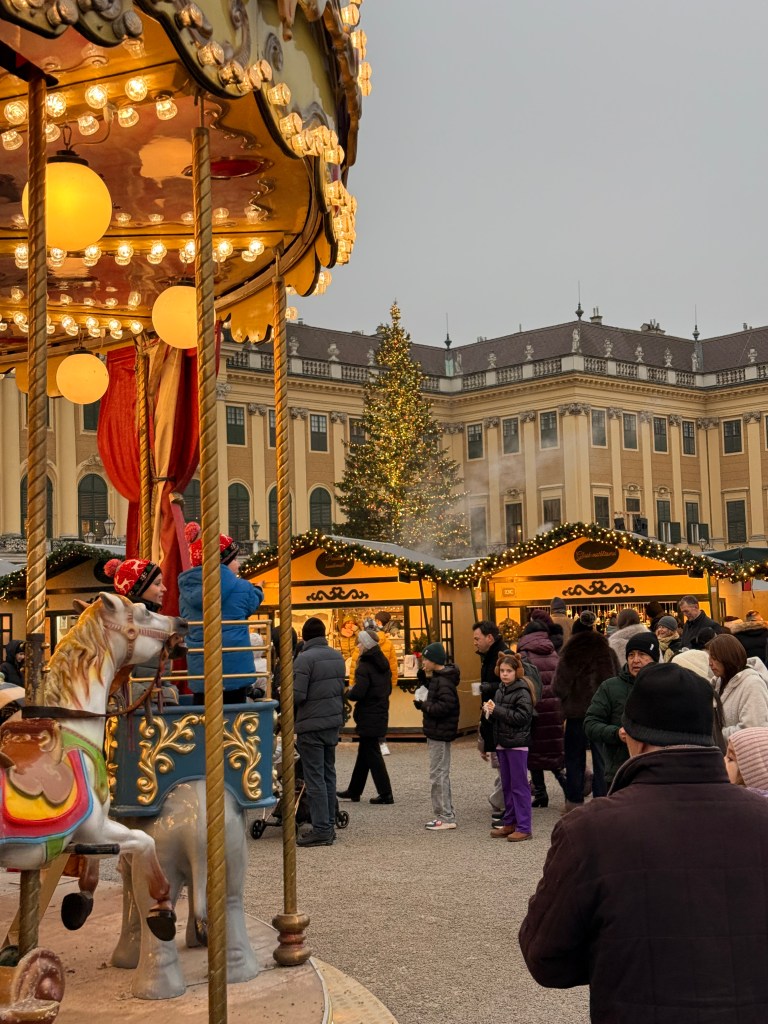
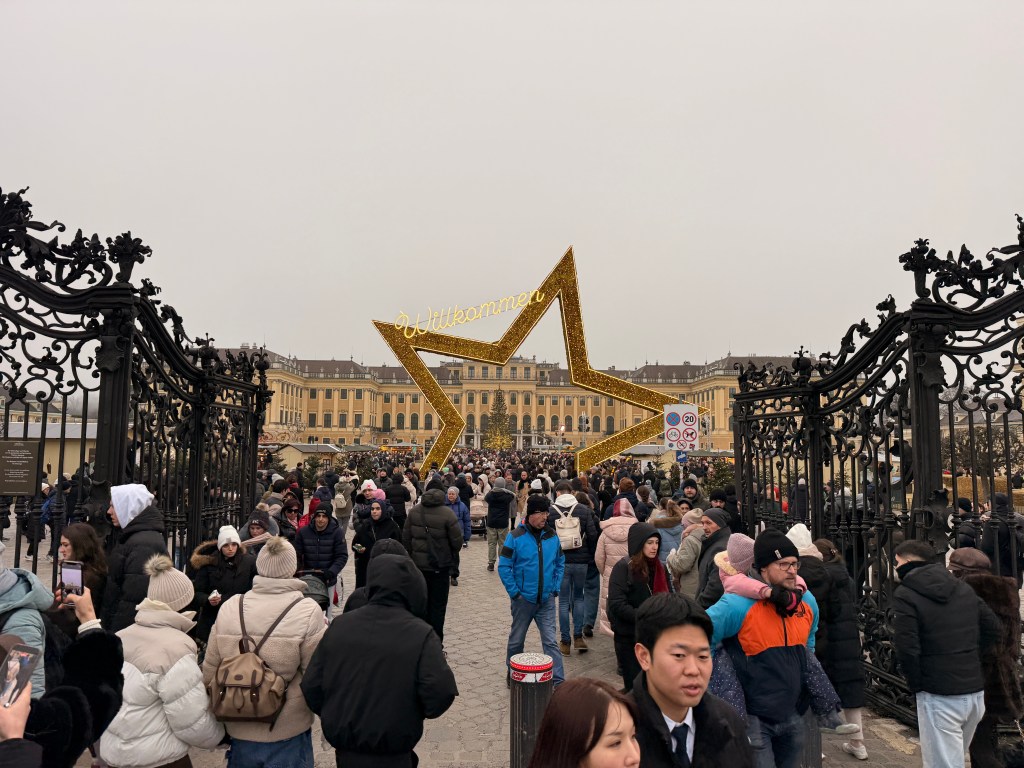
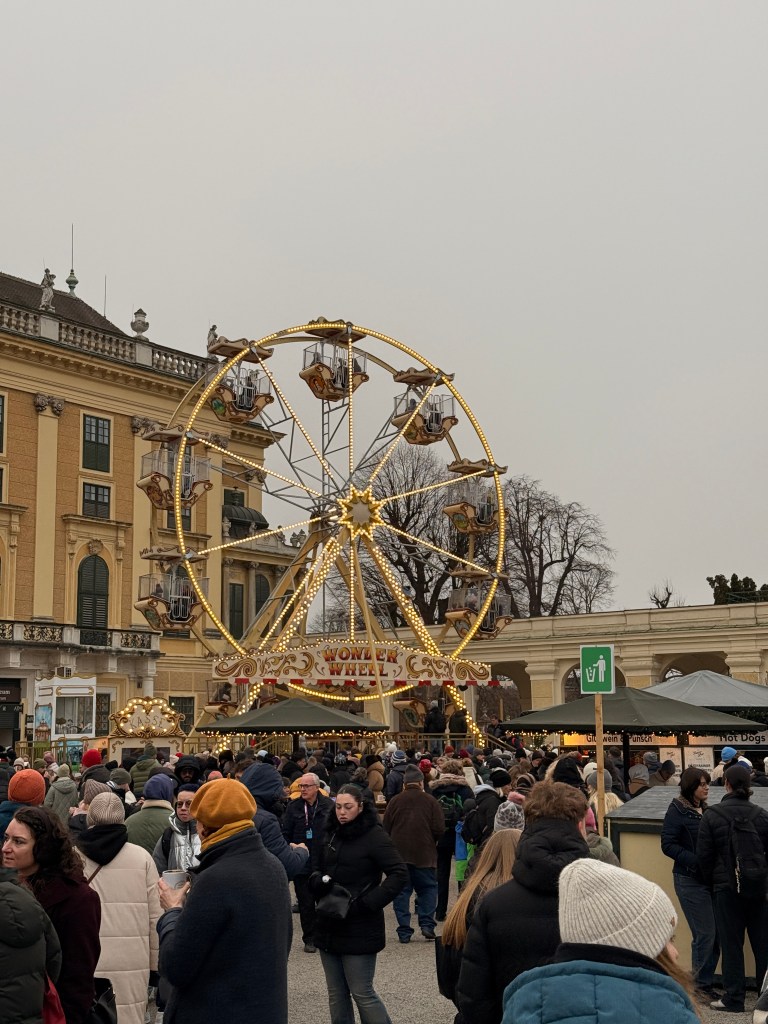
The route to Klimt’s Villa is evidence of a good neighborhood. Magnificent properties line the roads. His villa is a short walk from the tram. I arrive to a crowd of people – queuing (what a strange word) outside the Villa. I change my mind and decide to come in the week when it will hopefully be quieter. En route, we pass Schönbrunn Palace, and I am drawn to the massive Christmas market in front of the palace. By now I have seen it all…the trinkets, the wood carvings, the candles, the knitted wear (R600 for a beanie…) and all the wonderful food. Up until now I have been drawn to the Glühwein like a moth to a flame. Today I decide to be brave and try another punch: Orange and Lime, made with white wine. And Raclette – melted Swiss cheese served on the deepest yellow, butteriest potatoes imaginable. Topped with chives, gherkins, and crispy fried onions (this would seem to be a national treasure – I wrote about these during my previous visit to Vienna), it is the most perfect taste combination in comfort food. I am prepared to do another 16-stop tram ride just for this! The Orange/Lime punch is an exciting discovery – even though for a second I thought of MedLemon. It is crispy warm – if there is such a sensation – the perfect combination of sweet and tart with a little kick!

By now the tourists are streaming into Vienna – I hear Russian (or what sounds like Russian – could be anything) at all the markets. Yet, there is always a place for one in the little restaurants. I treat myself to escape into the little cosy pubs at night, mostly to rest my weary bones (which is a tale for another blog…). I am complimented on my German which makes me very confident – I am sure it is anything but perfect. But, I think the locals appreciate the effort. Last night I ducked into a little pub that was so crammed I had to sit beneath the coat rails, totally enveloped by warm coats, with a radiator at my back. Heaven, as the outside feel temperature was -4!
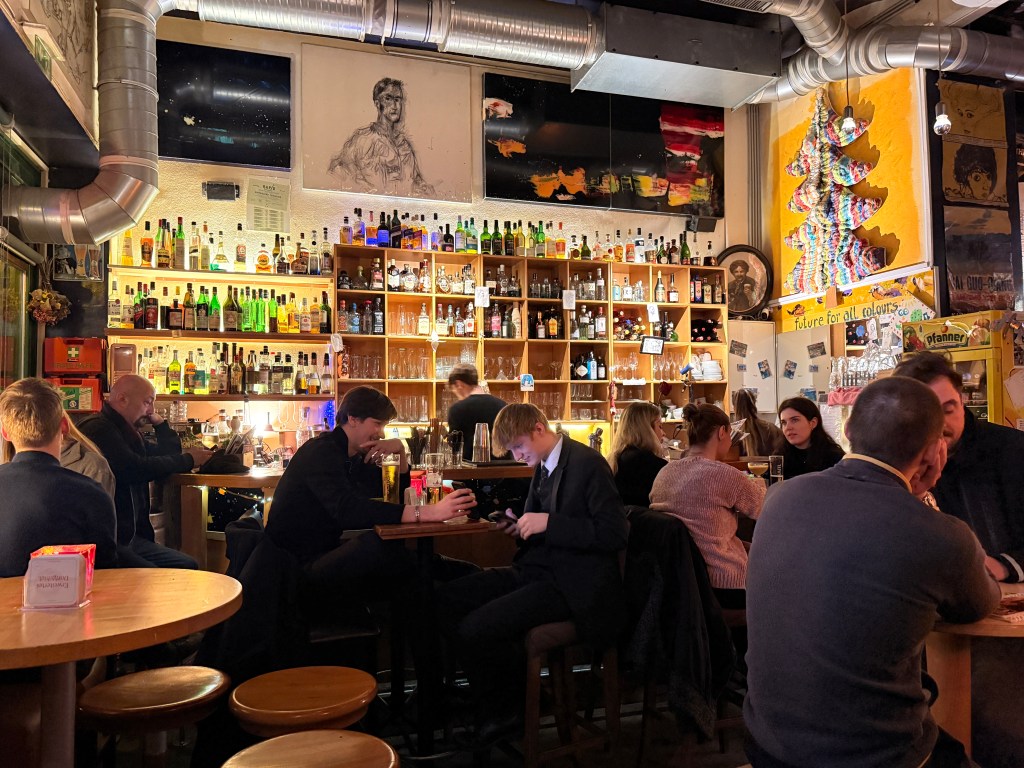
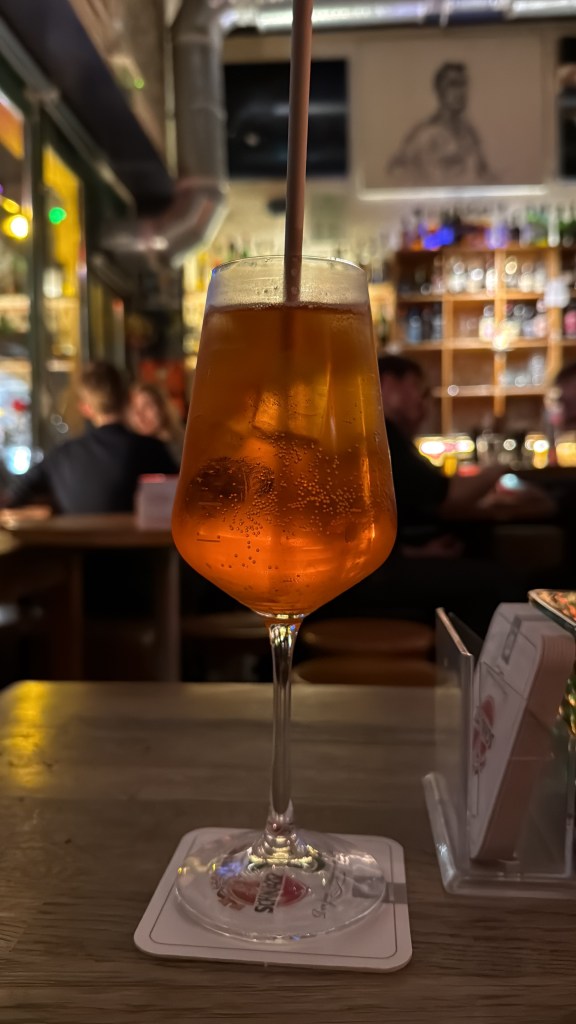
Aperol Spritz and an open toastie (that is what they call it as well) with more melted cheese and sun-dried tomatoes. The previous night I succumbed to a little café just off the busiest street (Mariahilferstrasse) and ordered Kaiserschmarrn. (I remember when I came to Austria with my mother – it was all she wanted to eat…). A light, fluffy pancake that is cut up, sprinkled with icing sugar, and served with a (usually) berry sauce.

There are hardly any vegetables in sight – something that always surprises me as the markets are brimming with the most wonderful fresh vegetables. In a restaurant or at the street food vendors, the best one can hope for is a potato. And then there is Spätzle – of all the local traditions most probably one of my favourits. (Well, perhaps a close second only to Krapfen.)
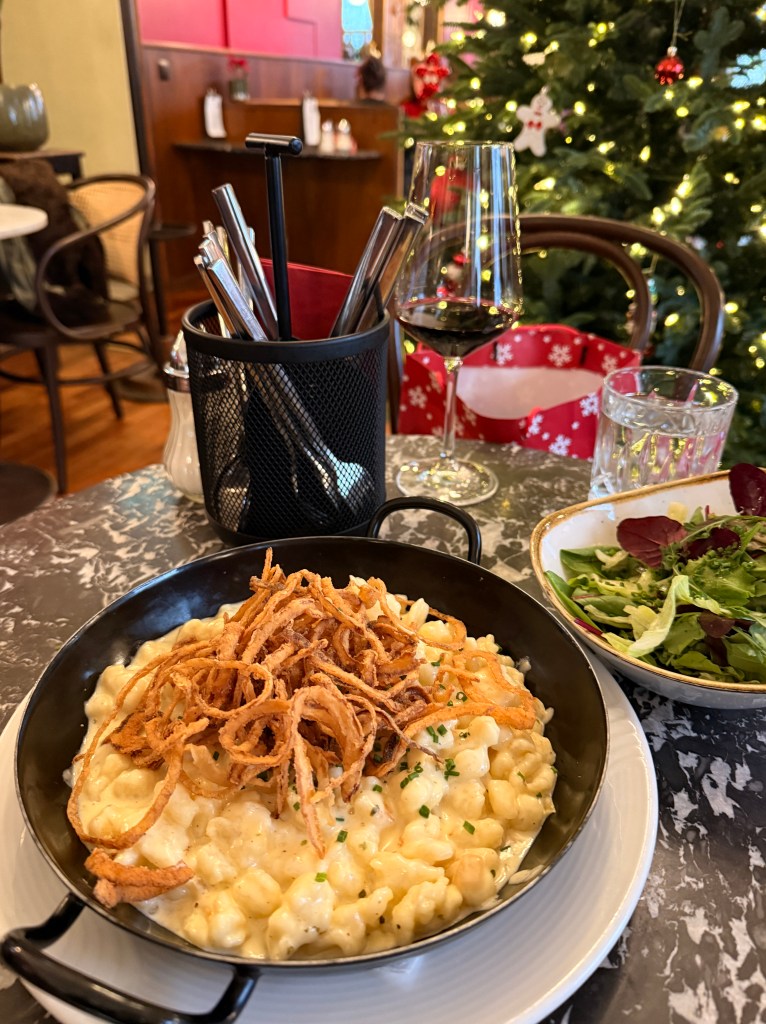
Spätzle – a type of egg pasta (called Nokedli in Hungary) is a typical Central European dish that is most common in Swabia and Alsace. The best way to eat this, for me, is with only cheese and these incredibly crispy onions, of course with a glass of red wine. It is very simple to make – basically a soft pasta dough that is chopped into fast boiling water. Yet, it is an art to make it so that it is not too glutinous. Chewy but not dense. It is also served as a side dish to meat, and in the lower part of Germany with a creamy lentil sauce.

Well now you know what I spend most of my time doing…

An ode to the Coffee Shop

Ode to a Coffee Shop.

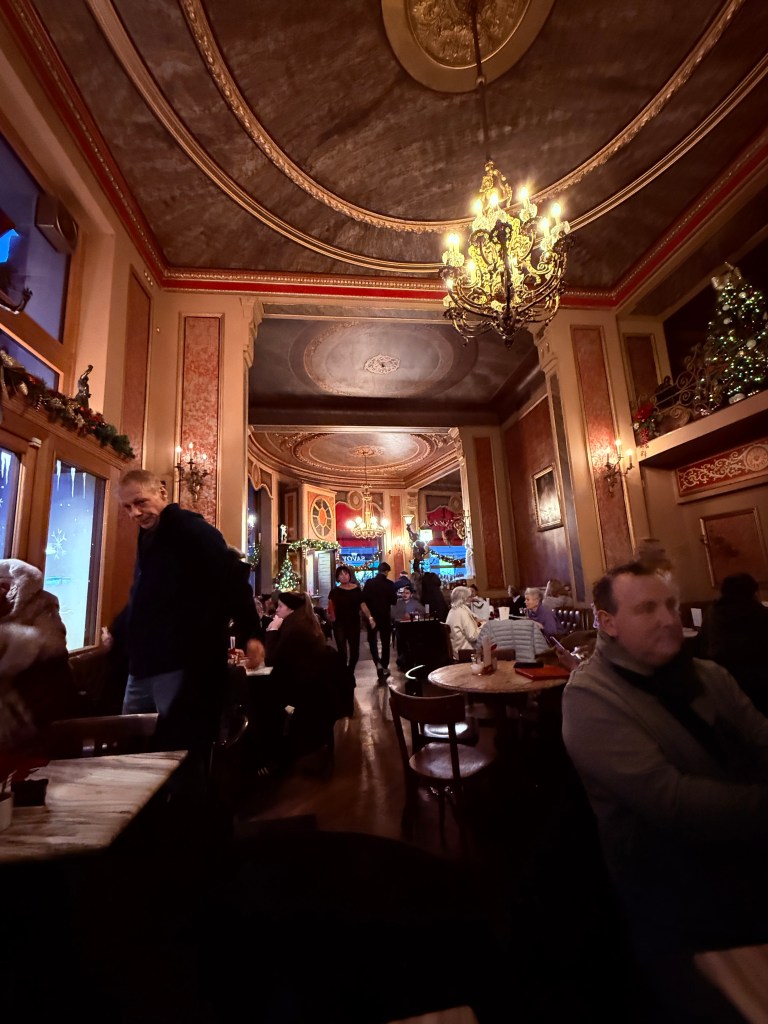
Why is it that Viennese coffee shops have such an air of distinction about them? (I am not talking the franchise type, of course.) There are a host of authentic coffee shops that have not only become major tourist attractions, they are globally recognised by UNESCO as “Intangible Cultural Heritage Sites”. I never knew this! Yet, walking into one of these establishments one feels the sense of culture that is enfolded inside. They are indeed the public living rooms of the Viennese, and as close as one would get to being invited into someone’s living room – “let’s meet at Café Prückel”.

There are many wonderful aspects to this cultural experience. For one, it is ok to linger. I suppose in earlier times it would be the place to sit and read, write a book, or have that deep conversation around the break-up of a marriage. Nowadays it is the prefect place to sit and work on a laptop or ipad, as one never feels rushed. The waiters are masters of their art. They manage the place by facial expressions – most of the time there is not a hint of a smile. A raised eyebrow shouts louder than a scream. Yet, they will never rush you, they most certainly do not come and ask if you are happy or satisfied with their food. They leave you alone. When they think you might deserve attention, they will simply slow down when approaching your table and make eye contact. Subtle…

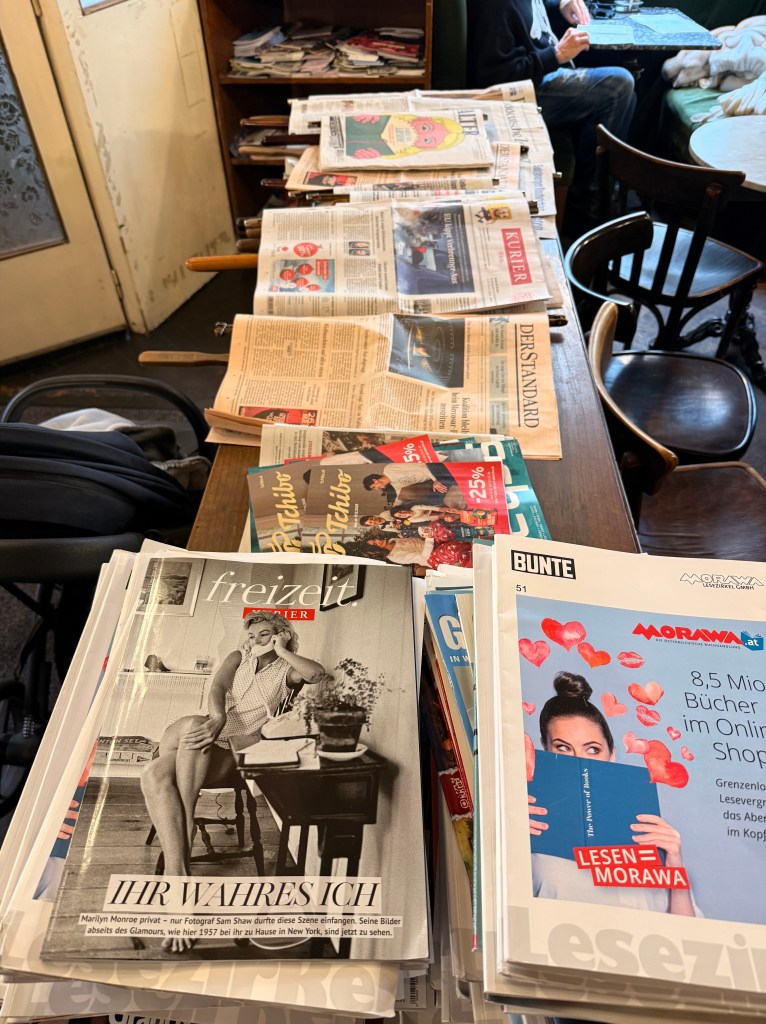
The coffeehouse unfolds as theatre—its décor a deliberate stage, its waiters quiet directors of the public, inviting us into a performance of our own making, exquisitely and almost imperceptibly choreographed. It creates a space to be in solitude, yet not alone. To have a private conversation in a place that feels safe and warm. The latest magazines to read and newspapers in wooden frames say “sit, relax, read, take your time…”

We know that some of the world’s greatest thinkers did their best writing and thinking in coffee shops – Freud being one of them. The Parisian coffee culture is where artists met, philosophers debated, and activists gathered in secret to plot their campaigns. A dear friend of mine’s husband was doing his PhD in Mathematics at the University of Bloemfontein. She told me that he did most of his best writing in coffee shops (I imagine Mugg and Bean in Bloemfontein). I remember my reaction – I thought it was the strangest idea ever! The noise? The constant hustle and bustle of people? Well, I tried it when writing up my own thesis and discovered it to be the best place to write! There are several coffee shops in Hout Bay where I would escape to write. It worked! Other than going to the bathroom, there were no distractions: not cats that want food/scratching/playing with pens on my desk. No garden to water or pencils to sharpen or fridge to unpack (I am the master of procrastination). And somehow, I did some of my best writing in the coffee shops!

As opulent as Vienna is on the surface, it presents an interesting tolerance and air of acceptance towards tourists, the homeless, and the outcasts. And dogs. There are so many dogs everywhere, and best of all is that they are welcome in even the grandest coffee shops! Like the Viennese, their dogs are sophisticated and incredibly well-behaved! Dressed in warm coats, they quietly lie down underneath tables, the smaller ones sitting on laps. I see the occasional snack being given from a plate. It is also evident that coffee shops create a space for older persons, many of whom I suppose are lonely. This is also their living room where they can be in the comfort and company of strangers. I watch them eat their apple strudel. Slowly. They read a paper while listening to the conversations around them. This indeed is perhaps the most important cultural role of the coffee house – creating a space for people to be in the presence of others without any expectations.

Café Prückel

My excitement about being in Vienna knows no bounds. I remember as a very small boy waking up in the morning, opening my eyes just a tiny bit to see if by any chance I was in Knysna with my grandparents. If I could focus peeping through my eyelashes and there were the white and red stripes of the curtains in the spare bedroom of my grandparents’ home, I would jump out of bed and dive into bed with my grandmother. (The stories of Knysna are in other blogs already.) I feel the same way here – I wake up every morning from a wonderful deep sleep, and in those first moments of waking (always reluctantly for me – I am not a morning person), I open my eyes to the most exciting discovery – I am in Vienna! I somehow cannot get used to the fact that this incredible privilege can be all mine.

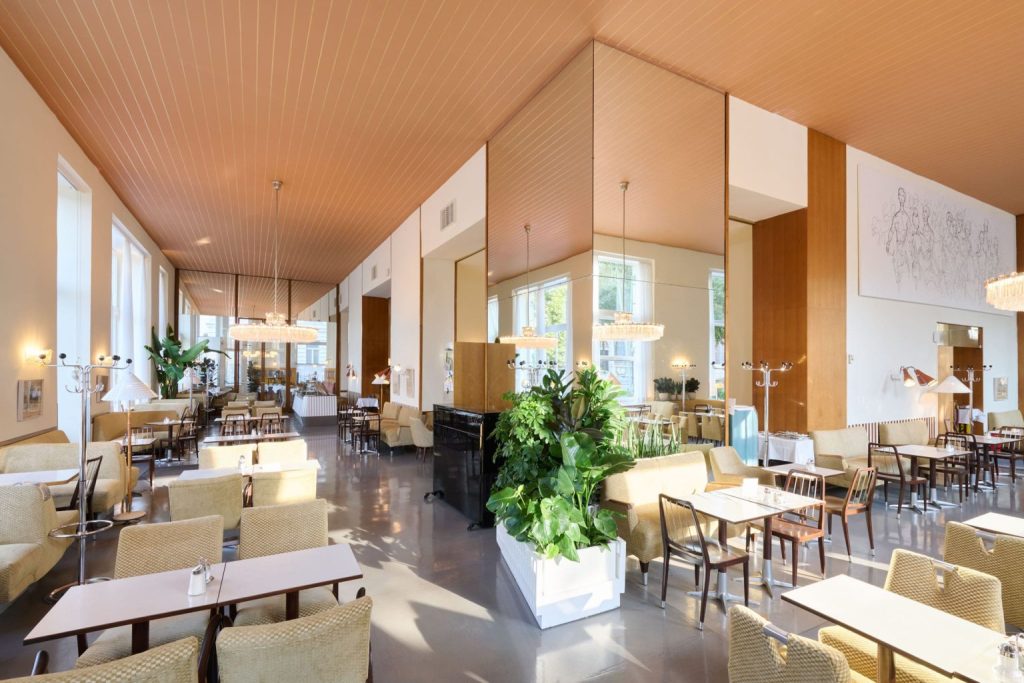
Today I met with a Ukranian academic who now lives in Vienna after a lifetime of working in field of ageing, mostly at the United Nations. We meet at one of the very typical Viennese Cafés, Café Prückel, to many considered their second livingroom in Vienna. Established in 1903 it makes on understand that UNESCO honoured Viennese Coffee Shop Culture as Intangible Cultural Heritage in 2011. Yes, that is how important Coffee Shop culture is in Vienna. Stylish, understated in 1950’s (what could be considered Swedish) decor, it oozes sophistication. No one dares just walking in and finding a table. The air of tradition keeps one glued to the doormat, like an obiedient dog that has been trained to not set foot off that mat. Waiters and runners (the former in uniform of black waistcoat, the latter in plain white shirts) make no effort to meet you at the door the minute you walk in. Trying to make eye contact is impossible, the art of ignoring this is highly evolved.

My host booked a table for us – the waiter eventually appears and in my best German I am proud to announce that we have a reservation for two people. Showing no appreciation for what I consider to be perfect German, he shows me to a table to sit in the meantime, as I am ten minutes early for the booked appointment time. Unforgivable, I see how my esteem is diminished. The undressing ritual starts – coat off, definitely cap off and hung on the very full coat stand. (I am not sure about the scarf etiquette, however, I decide to make my own rule as I love my bright orange pashmina.) Dead on 11h00 my host arrives and is shown to the reserved table which is now free. Of course.

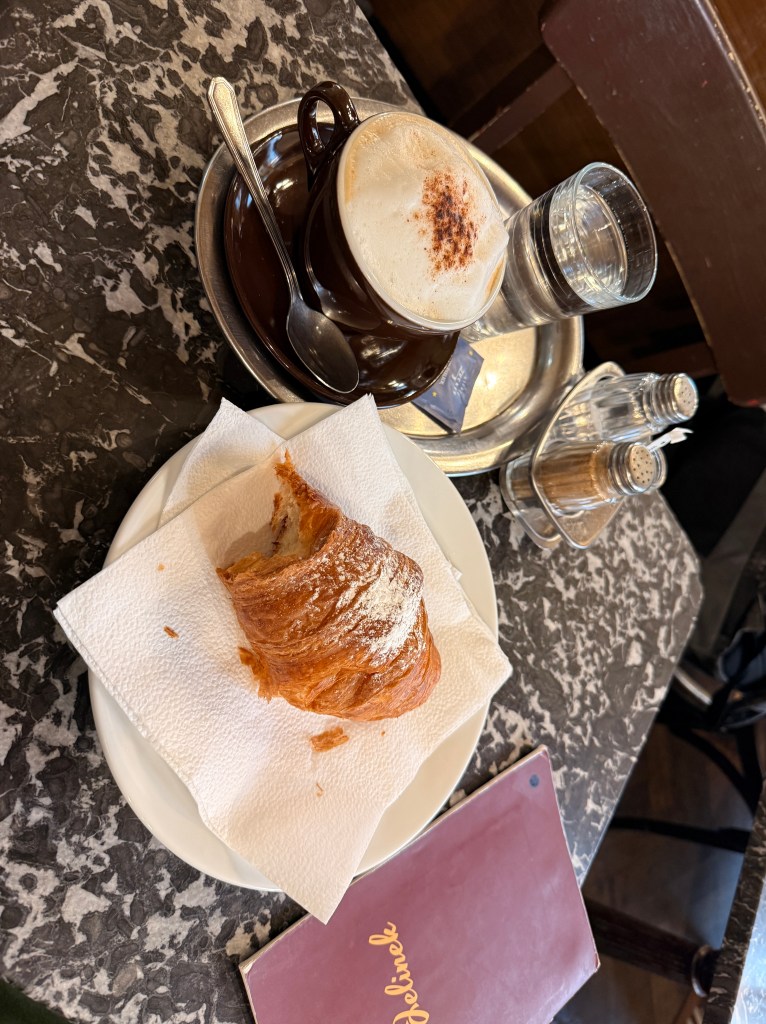
Our waiter is a man of middle age (meaning he is a bit older than me). Stern. In spite of my impeccable German (in my opinion, which I rehearsed on the way to the Café), he has to repeat our order with a frown just to make sure we understand that our German is still that of a foreigner. Coffee is served on a small, oval silver tray with a demi glass of water on the side. Always the water. Then enters the period of being completely ignored – you have your coffee, now shut up. We want to order two croissants. Catching his eye is impossible. I eventually do the most uncouth thing possible – raise my hand as he walks past. A sideways sneer with a hiss of “gleich” comes my way, followed by another few minutes of being ignored. Exasperated, he comes back; we order our croissants, feeling like schoolchildren who have been scolded for talking out of turn.

When the time comes to get the bill, I am too scared to even look at him. Yet, we manage to catch his eye and pay the bill. As he is about to take away the two little silver trays, he notices that neither of us had drunk our water. He puts the trays back, looks at us and says in perfect English “drink your water, it is good for you!” Like our school hostel matron when I was a child waiting for us to take our medicine, he stands watching us empty our two glasses of water. Very politely he smiles and thanks us for visiting. The next guests are already waiting for our table.