Ode to a Coffee Shop.
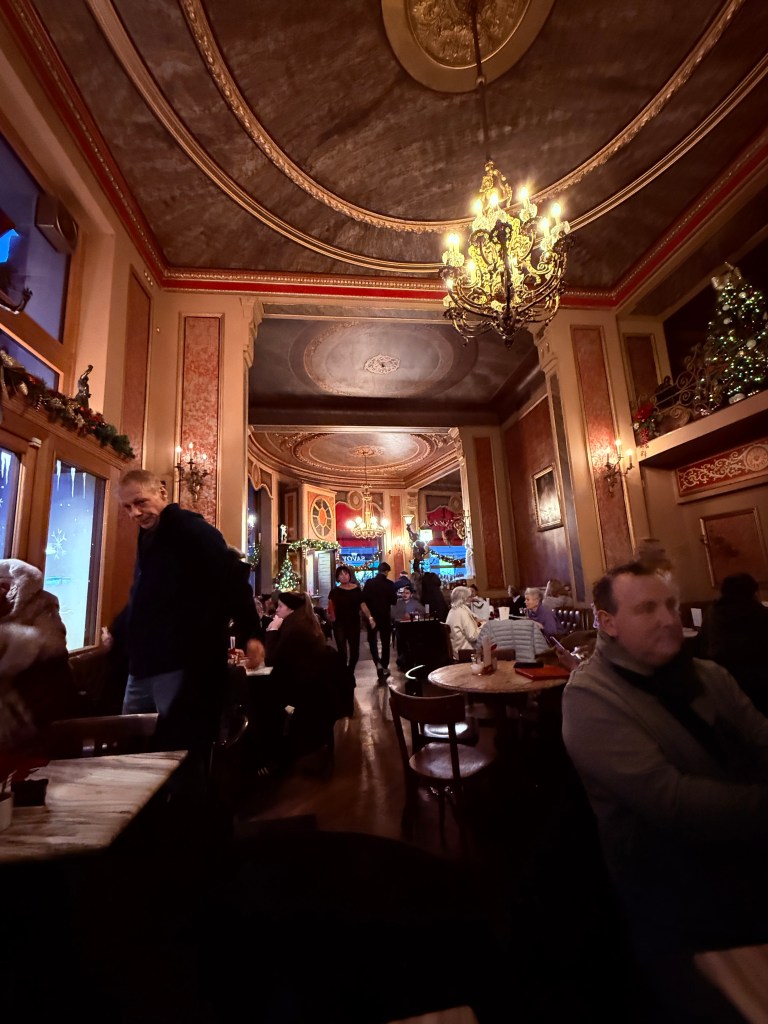
Why is it that Viennese coffee shops have such an air of distinction about them? (I am not talking the franchise type, of course.) There are a host of authentic coffee shops that have not only become major tourist attractions, they are globally recognised by UNESCO as “Intangible Cultural Heritage Sites”. I never knew this! Yet, walking into one of these establishments one feels the sense of culture that is enfolded inside. They are indeed the public living rooms of the Viennese, and as close as one would get to being invited into someone’s living room – “let’s meet at Café Prückel”.

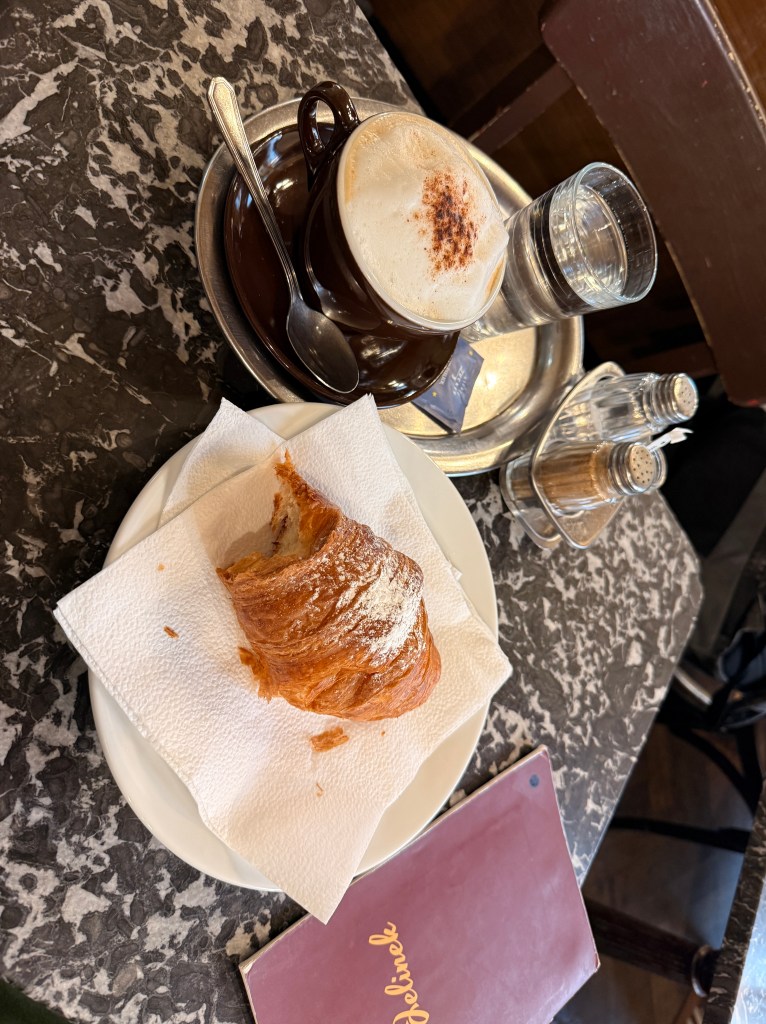
There are many wonderful aspects to this cultural experience. For one, it is ok to linger. I suppose in earlier times it would be the place to sit and read, write a book, or have that deep conversation around the break-up of a marriage. Nowadays it is the prefect place to sit and work on a laptop or ipad, as one never feels rushed. The waiters are masters of their art. They manage the place by facial expressions – most of the time there is not a hint of a smile. A raised eyebrow shouts louder than a scream. Yet, they will never rush you, they most certainly do not come and ask if you are happy or satisfied with their food. They leave you alone. When they think you might deserve attention, they will simply slow down when approaching your table and make eye contact. Subtle…
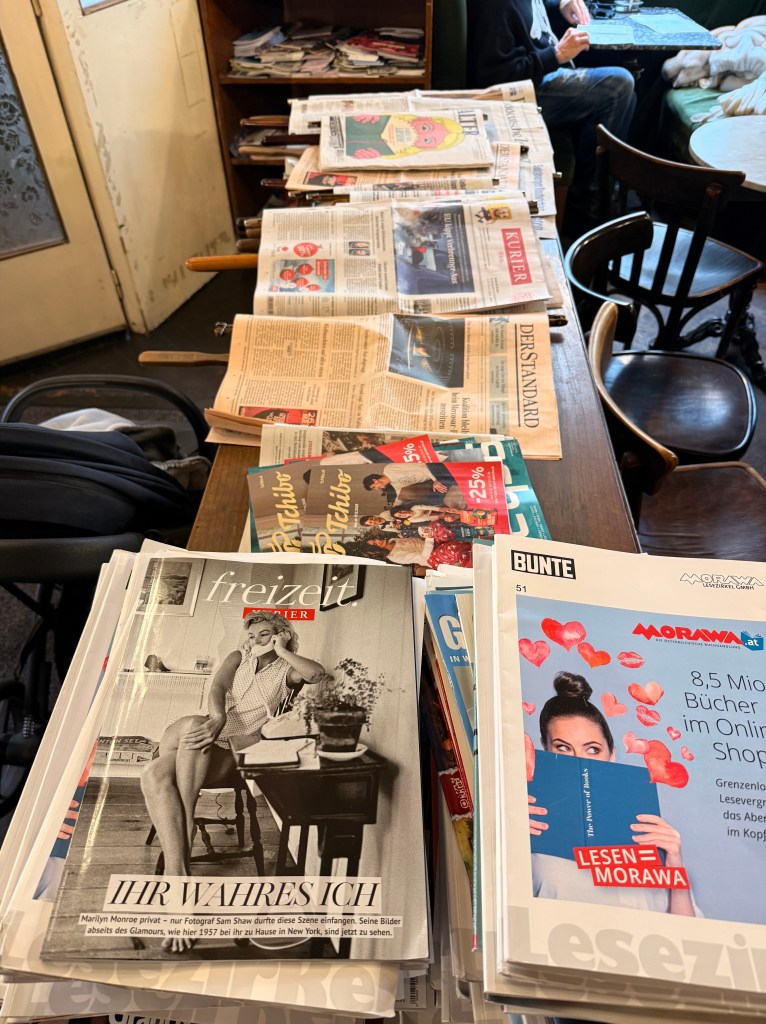
The coffeehouse unfolds as theatre—its décor a deliberate stage, its waiters quiet directors of the public, inviting us into a performance of our own making, exquisitely and almost imperceptibly choreographed. It creates a space to be in solitude, yet not alone. To have a private conversation in a place that feels safe and warm. The latest magazines to read and newspapers in wooden frames say “sit, relax, read, take your time…”

We know that some of the world’s greatest thinkers did their best writing and thinking in coffee shops – Freud being one of them. The Parisian coffee culture is where artists met, philosophers debated, and activists gathered in secret to plot their campaigns. A dear friend of mine’s husband was doing his PhD in Mathematics at the University of Bloemfontein. She told me that he did most of his best writing in coffee shops (I imagine Mugg and Bean in Bloemfontein). I remember my reaction – I thought it was the strangest idea ever! The noise? The constant hustle and bustle of people? Well, I tried it when writing up my own thesis and discovered it to be the best place to write! There are several coffee shops in Hout Bay where I would escape to write. It worked! Other than going to the bathroom, there were no distractions: not cats that want food/scratching/playing with pens on my desk. No garden to water or pencils to sharpen or fridge to unpack (I am the master of procrastination). And somehow, I did some of my best writing in the coffee shops!
As opulent as Vienna is on the surface, it presents an interesting tolerance and air of acceptance towards tourists, the homeless, and the outcasts. And dogs. There are so many dogs everywhere, and best of all is that they are welcome in even the grandest coffee shops! Like the Viennese, their dogs are sophisticated and incredibly well-behaved! Dressed in warm coats, they quietly lie down underneath tables, the smaller ones sitting on laps. I see the occasional snack being given from a plate. It is also evident that coffee shops create a space for older persons, many of whom I suppose are lonely. This is also their living room where they can be in the comfort and company of strangers. I watch them eat their apple strudel. Slowly. They read a paper while listening to the conversations around them. This indeed is perhaps the most important cultural role of the coffee house – creating a space for people to be in the presence of others without any expectations.
 Italy 2017